Articles by Bo Mackison

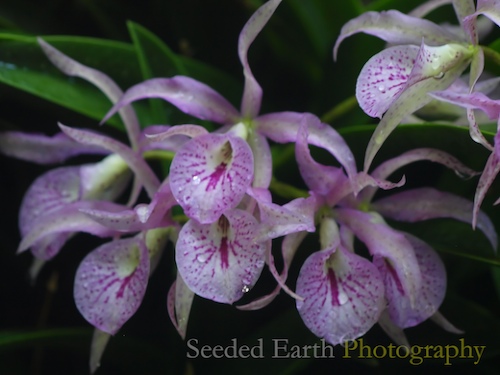
Cattleya Orchids

Cattelya Orchids

see url Cattelya Orchids

https://drbatayneh.com/about/ Another of the many orchid specimens from the Bolz Conservatory in Olbrich Botanical Gardens in Madison. This orchid is of the Cattletya species and is grown natively from Costa Rica to tropical South America, though I am happy to get the privilege of seeing it in our hot house (or greenhouse) in our cold city. The cattelya orchids can be found in almost any color except black or blue. I rather like lavendar orchids. This one is no exception.


Winter Bouquet

. . .Like a Painting

go site All that Remains . . .

source site We have all seen things of nearly unimaginable wonder. Have we captured these wonders in a way that we can share our awe with others? If not, we relegate these moments to the realm of memory. Or even worse, they are forgotten, and for all purposes they cease to exist.

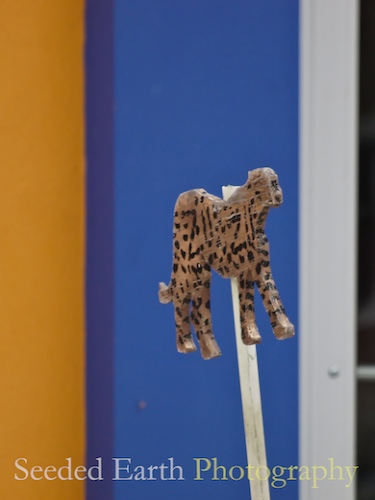
Leopard on a Stick

See the Leopard?

See the Leopard?

There’s just something about living in Wisconsin and realizing it is only the first third of January, and winter is going to hang around for a few more months. . .made me want to post this set of photos. Just for the fun of it, I guess. This is the Zuzu Cafe (cool name, yes?) across the street from the Vilas Zoo in Madison. I find the leopard on a stick a rather endearing thing. You can’t see this just anywhere!
Now Can You See the Leopard on the Stick?

See the Leopard on a Stick?

And I love the yellows and blues. It’s a challenge to find much color in the city. There’s a lot of snow, which has taken on a nasty gray tinge, so any color I see these days I consider good color.

I was tempted, just a bit, to name the top photo “The Red Shovel” or even “A Study in Primary Colors” but I had to go with “Leopard on a Stick.”  Just had to. . .

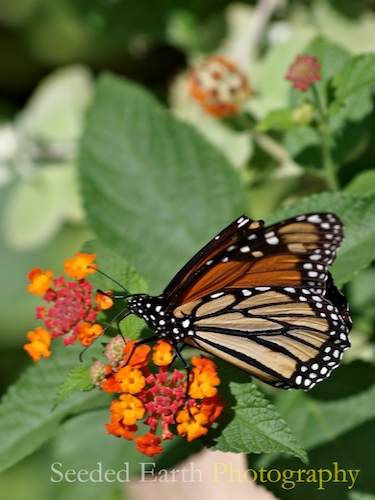
Monarch Butterfly, Sitting Pretty

Desert Botanical Garden

Desert Botanical Garden

When we were traveling in the Southwest last fall, we visited the Desert Botanical Garden in Phoenix. The Maricopa Monarca Butterfly Exhibit was open and we spent some time wandering in the Marshall Butterfly Pavilion, getting a close-up view of hundreds of Monarchs. This Monarch is sitting on a Lantana flowering plant.

I never gave much thought to the migration of Monarchs until I stumbled upon the fact that only one in four generations of Monarchs actually migrate. Three out of every four generations of Monarchs live only 10 weeks or so. The fourth generation lives up to 8 months. Here’s the story:

A typical Monarch runs through its life cycle in about 10 weeks. Four days inside the egg, two weeks as a caterpillar (larvae) while it lives on and munches through its host milkweed plant, then ten days inside its chrysalis. Finally the Monarch bursts forth in all its glory, and lives as an adult butterfly for maybe 2 to 6 weeks. At least this is the life style of 3 out of 4 generations of Monarchs. The wintering or migrating generation (the fourth generation) flies south and lives through the winter. The monthly time-line is a bit like this:

Order Tramadol Overnight February/March – the Monarchs that hibernated in the southern regions of California and in Mexico come out of hibernation, find a mate, and return to the North where they lay their eggs. When they die, they have lived a long life for a Monarch – perhaps 4-5 months as adults while they hibernated during the winter.

go to site March/April – The first generation of this year’s Monarchs are born and proceed with business as usual (egg, caterpillar, chrysalis, adult)

https://gritandgracefamilyfarm.com/the-doghouse/ May/June – The second generation does as the first generation did.

go July/August – The third generation does as the second and third generations did.

go to link September/October – This is the lucky generation if, as a butterfly, you wish to be a traveler and live a long (relatively) life. The fourth generation goes through the familiar cycle, but the adults do not die. They migrate to the South, hibernate in the warm climes of Southern California or Mexico, and then they lay their eggs the following https://www.appliquecafeblog.com/background-photo/ February/March.

And then the process repeats itself, over and over.

Nature is very curious and very cool.

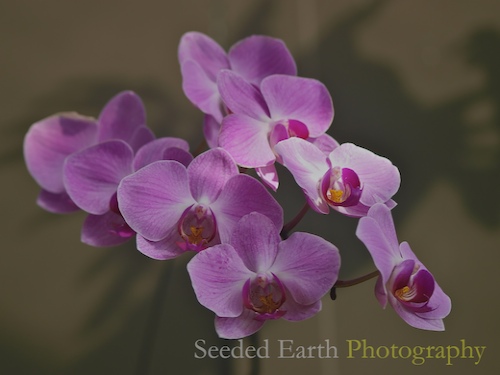
Purple Orchids

Phalaenopsis

Phalaenopsis

I decided to do some indoor photography today – I’m a little tired of the icy glaze covering the snow which makes walking outside hazardous to my health – so I went to one of my favorite places in Madison, the Bolz Conservatory which is part of Olbrich Botanical Gardens. The Conservatory was really warm. I quickly shed my sweater, and literally was wiping perspiration from my forehead midway through the shoot. But the orchids all seemed to be thriving in the heat and humidity.