‘Golden Shadow’

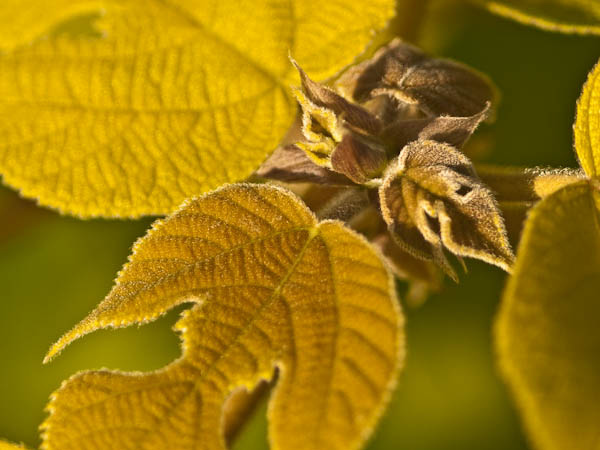
Buy Lorazepam Online Without Prescription 'Golden Shadow' © 2010 Bo Mackison

see I took this photograph of a most unusual plant a few weeks ago at the Olbrich Botanical Gardens. I took it before we had had our first frost. I took it when we’d had an abundance of rain. I took it when the mosquitoes were each the size of a dive-bombing hornet, and each mosquito had targeted me as dinner. Therefore, I grabbed a quick look at the tag on the plant, and noted its name was ‘Golden Shadow.’ And I took cover in the car in an attempt to escape the mosquitoes.

Order Valium Without Prescription Weeks later, I wanted to find out a little more about these lovely golden shadow leaves and so I started Googling “Golen Shadow’.  I found a dogwood with the name of ‘Golden Shadow’ – no resemblance. Then I found a Paper Mulberry ‘Golden Shadow’, but it looked nothing like this plant either.

http://www.ztpackaging.com/soft-loop/ So though I love the unusual look of this plant, and it has the most wonderful deep butterscotch color, and the texture was a velvety nub, I have no identity for it other than “Golden Shadow’.

Seeing in Frames – A Guest Post by Robin Simmons

Order Soma Online Nayad © 2010 Robin Simmons

https://gritandgracefamilyfarm.com/the-doghouse/ This is the second in a series of guest posts. I asked blog visitors to answer the question “How has photography had a positive impact on your life?”  and Robin wrote this response. (Thanks Robin.) This is a question I’ve been exploring in my recent series “Why Photography?”

source site Buy Online Soma Seeing in Frames Buy Soma Overnight by Robin Simmons

see A few weeks ago someone wanting to learn how to take better photographs asked me the question, “How do you decide what goes into your pictures?”  Without thinking, I answered, “I just see things in frames.”

Purchase Tramadol Without Prescription Having considered it since then, I realize that my answer was vague and lacking in details such as how to compose a shot, the best lighting, and other technical information.  There are books and websites and classes to help you learn how to frame and/or compose a shot, and they can do a better job than I can of explaining composition, lighting, shutter speeds, and the like, as I am not formally educated in photography and prefer to work intuitively rather than by the rules.  For me, photography is play, a time to experiment with settings and framing, to lie on the ground and point up or turn the world upside down or sideways.

https://www.52editions.com/education/ My answer, “I just see things in frames,” was a straightforward response.  I do see things in frames.  I wear glasses and have worn glasses since I was 7 years old.  Everything is framed to some degree by my glasses, and photography is, in some ways, an extension of that.  Photography is a medium which allows me to share with others the way I view the world and the things in the world which catch my eyes through the frames that I wear by bringing the viewer into those frames and my focus.

follow url Through the lens of the camera I am able to see some of the details of the world, small and large, that I might otherwise miss.  When I take a photo of a tiger lily I see the flower, the tiger lily. When I put that photo on the bigger screen or a print, I see the details of the tiger lily that the camera captured, details my eyes could not see. I also see things that my eyes didn’t catch when I captured the tiger lily such as a bee buzzing around the flower like a little fairy, an ant crawling up the stem, a dot of pollen perched on the edge of a petal.  The camera, like my eyes and prescription glasses, also has its limitations.  Light and colors, fog and haze, dust motes and seeds floating in sunlight don’t always translate well in photography.  Learning post-processing techniques with Photoshop has helped me expand my vision so the photo better represents what I was seeing as I captured the scene or moment.

http://www.ztpackaging.com/laminated-bags/ Photography has brought an awareness to my life and to my surroundings I don’t believe I would have without it.  It brings me into the moment, eyes and mind wide open as I hike or walk, sit or stand, connecting me to where I am right now, in this moment.  Carrying the camera makes me hyper-aware of the environment — spotting a small flower in the midst of some weeds or a colorful mushroom growing under a bush or any number of other things I might have otherwise passed on by without a glance much less a good look.

Zolpidem Buy Online Above all, photography has taught me patience.  I cannot capture a butterfly, a dragonfly, or one of my young granddaughters without learning to be still as they dart around in their dance of life and play.  In that stillness I have learned to wait until I sense I am on the verge of the right moment and even then I may have to wait before moving slowly and cautiously to get within range of what I am trying to capture, watching the patterns that emerge, patterns I would not be able to discern without practicing stillness and patience.

Diazepam Online Purchase Robin is a photographer living in the secondary snow-belt of northeast Ohio.  Her photography interests include nature and the outdoors as well as travel.  Her blog, Life in the Bogs, chronicles her daily life in Ohio as well as her travels.

‘Queen Charlotte’ Anemone

Purchase Hydrocodone Online Queen, Center Stage © 2010 Bo Mackison

https://www.52editions.com/notices/ This simple purple flower, a Japanese anemone, is formally known as ‘Queen Charlotte’. I was attracted to this particular flower because two of the yellow stamens have bent towards the center of the flower. With a little imagination, I can see a little butterfly kiss. This flower is also called a windflower.

https://www.wjsmithconstruction.com/customer-reviews/ Photographed at Allen Centennial Gardens on the University of Wisconsin campus in Madison.

Camera as a Tool Box – A Guest Post by Quinn McDonald

go site This is the first of several guest posts from blog visitors who answered the question  “How has photography had a positive impact on your life?” — a question I’ve been exploring in my recent series “Why Photography?

Get Ambien Prescription Online Quinn McDonald tackled this question in the following post:

Hong Kong, in those years, was a noisy city that you would never mistake for your home town anywhere in America. The smells of lacquered duck, thick spices, the suffocating stench of Durian fruit that hung in the humid air all clashed with the raw sewage running down the gutters. I rose half a foot over the tallest person in the street, and the metallic snicking sound of my shiny new Pentax SLR loaded with 35mm slide film marked me as a tourist–and a new camera owner.

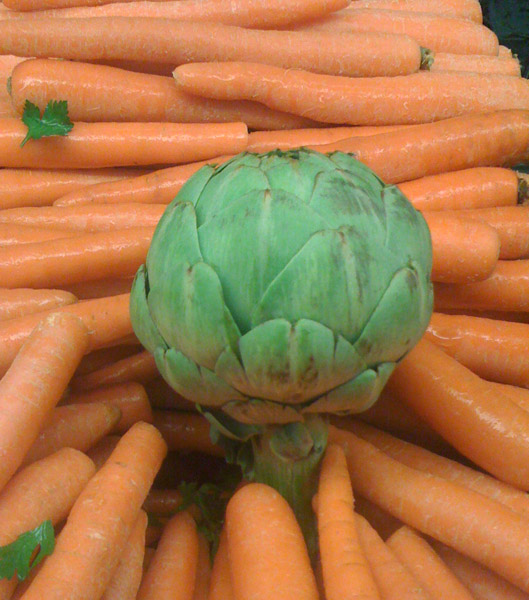
Carrots and Artichoke © 2010 Quinn McDonald

For 10 years, going on a trip meant taking the camera bag—about the size of a diaper bag and much heavier than a laptop. Loaded with lenses—the smallest was the size of a fist, the largest, the length of my forearm, I lugged camera gear through airports and train stations.

I never thought of myself as a photographer. I took photographs to help me remember the details of the art museum vernissages I produced for a large multi-national company.  Was the company logo in the right place? The right color? Were the cutlines on the photos as ordered? Did the caterer use only first-rate vegetables? Photographs helped me answer details I could never have assured the client had happened otherwise.

Jobs changed, travel continued. The camera bag stayed home. Trips were so much easier, lighter, faster. That’s what I aspired to be: light and fast. I traveled 100,000 miles that year, had a housekeeper walk out when I was 3,000 miles away from my 7-year old, and in one unforgettably wrenching week, watched my dad die, my divorce come through, and my boss fire me for taking an unscheduled day of vacation to bury my father. I didn’t have time for a camera. I was trying to provide for my family.

Technology shrank the camera, and made it impossible to use. Technology and I struggled. I lost. How was I going to get along with cameras that had confusing icons? What did that half circle mean—point it at the rising sun? A waning moon? A sliced tomato? I never knew.

What I did know was that the best camera is one you know how to use well enough to take with you. And my iPhone did just that. Within 24 hours of buying my iPhone, I knew how to use every feature it came with–including the camera. It was effortless to download the images to the computer.  My camera was a different tool: I could show clients writing samples and training classes.

The camera is a great visual guide: when I had to take something apart, I took photos of each step, then looked at them in reverse order to reassemble. When my car dripped mysterious fluid, I took a photo of the puddle and the source of the leak to show to the car repair shop.

I’ve watched a hummingbird egg hatch by taking photos of a nest over my head, out of reach of my eyes, but not of my iPhone. I took a photo of the sunrise to mark the last day of writing the book. I took a photo of a tree growing through a tree house, and the images became pages in my art journal.

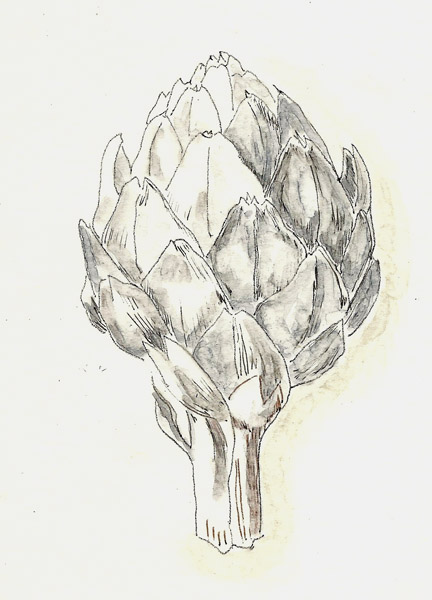
As an artist, I use the camera to help me see an object one way, so I can draw it the way my mind sees it. This is the reverse of what most people do—they take a photo to show the world what they see through a viewfinder. The artichoke photograph (above) is round, but I wanted a pointy artichoke, and that’s what it became when I used Micron pens and Copic markers to recreate it.

Artichoke Art © 2010 Quinn McDonald

The Hong Kong of many years ago vanished, replaced by an industrial center of tall buildings and massed human traffic. But the stranger filled with wonder still exists in any city of the world, there to witness change, now armed with a camera smaller than the original lens cap.

Quinn McDonald is a creativity coach who helps her clients through change and re-invention. 

Dewy Geranium

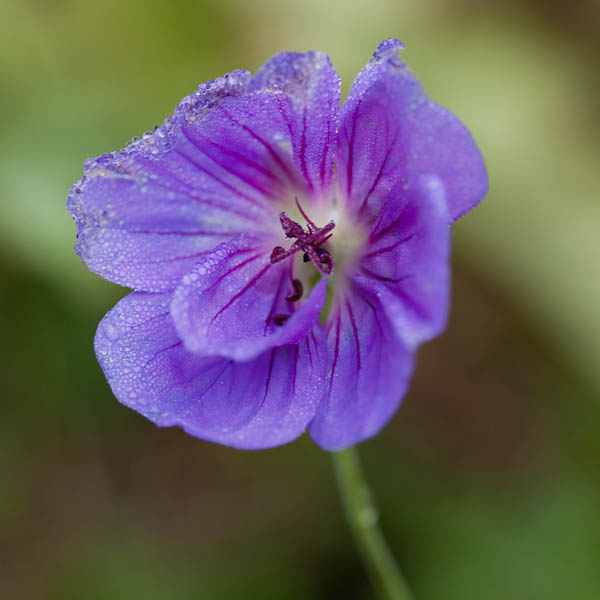
Dewy Geranium © 2010 Bo Mackison

There aren’t a lot of flowers in my perennial garden in the backyard. When I went garden strolling early this morning, there were a few spikes of lavender, some raggedy purple coneflowers, quite wabi-sabi, and several geraniums that were soaked in dew, but the dew couldn’t hide those brilliant purple geranium colors.