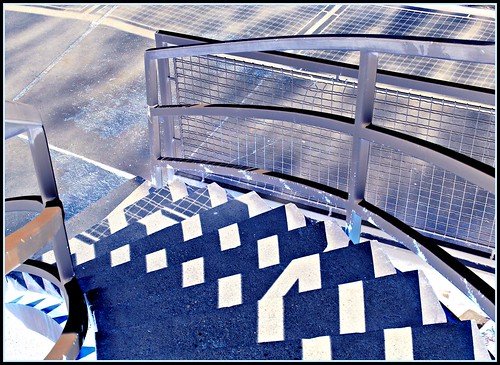
Checkered Path

Checkered Past

While wandering around the University of Wisconsin’s campus, I came across this great shadow/light pattern. Had to play with these stairs a bit to make the checkerboard really pop. Sometimes you just gotta have a little fun with the photos. Create and play and marvel at the complexities of computerdom and software intricacies.

Imagine. Seventeen years ago this month, we bought out first home computer. 128k Hee hee. And we were SO impressed. The first program we got was Sticky-Bear Math for my then 3 year old. Anybody out there remember Sticky-Bear?
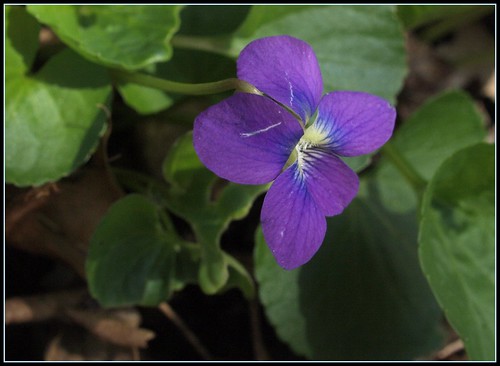
Three Violets – Oops, Four! – Which is Your Favorite?

There are over 900 species of violets, but I only have three four to share with you so far. And if you read all the way to the end of this post – there’s a contest and prizes in celebration of Seeded Earth reaching visit # 30,000 a day ago.

Confederate Violet

I have always called this a Confederate Violet, though it isn’t listed as such in wildflower guides. The name seems to refer to its color resemblance to the Confederate uniforms worn during the Civil War, which were a pale gray-blue color.

It is actually an atypical Common Blue Violet, (the violet in the next photo) and mostly enjoyed by us folks in the Midwest US.

Common Blue Violet

This is the Common Blue Violet. It blooms March through June, and is found throughout the eastern half of US. This species of violet is as common in my yard as my grass. And nearly as common as my dandelions and clover. 🙂

Its leaves are high in Vitamin A and C and can be used in salads or cooked as greens, and the flowers can be made into candies and jellies. Here’s a recipe for Violet Jelly. It was my favorite from all the ones I read, because the jelly-maker was concerned enough to give us a hint so the jelly doesn’t look like it’s full of wilted bugs!

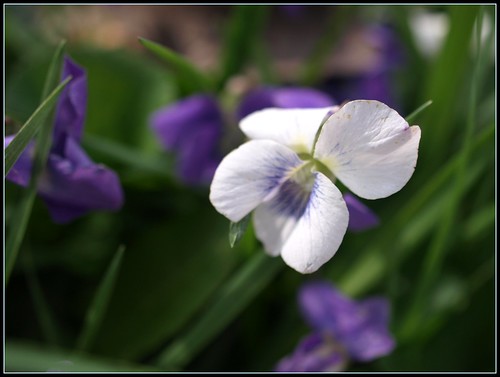
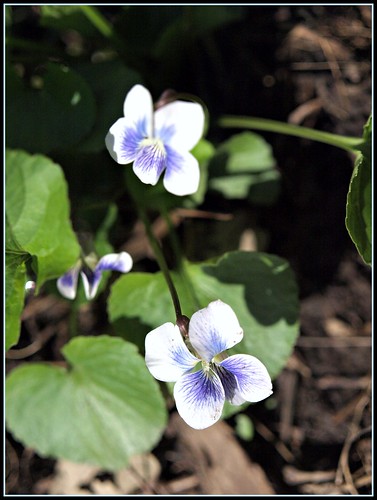
Sweet White Violet

This is the Sweet White Violet, and is much whiter than the Confederate and also has a nice fragrance. (Many violets do not have a fragrance.) This violet is fairly simple to find in the northern part of the United States east of the Mississippi River. It blooms in April- May in wooded areas.

One of the distinguishing characteristics of this violet is the backbending and twisting of the two upper petals. It’s the violet gymnast!

So do you have a favorite?

The mutant soldier?

The lawn-infested jelly ingredient?

The perfumed gymnast?

Why not leave a comment and vote for your favorite? We’ll see which one comes out as the Seeded Earth’s Favorite Violet!

*** In celebration of Seeded Earth surpassing 30,000+ visits, I’ll anonymously choose one ‘voter participant’ and send you an 8″ X 10″ MATTE PHOTOGRAPH, your choice from my blog – if you want one, that is – AND A SOMETHING SPECIAL GIFT MADE IN WISCONSIN. I’ll announce the winner on Sunday, May 11. And I’ll post a photo of the Wisconsin prize, too. ***

Addition on May 5. I want to add one more violet to this violet post, though I don’t think this guy will have much a go at the contest. He’s a pleasant sort, so he won’t mind.

Downy Blue Violet

This is the Downy Blue Violet and its petals are broader than they are long, giving it a shape rather like a butterfly. It has a soft whiskery coat and is a lovely medium shade of blue. The Downy grows very low to the ground on barely any stem, so it can be easy to miss.

The whiskery butterfly?

Nothing Spectacular

Nothing Spectacular

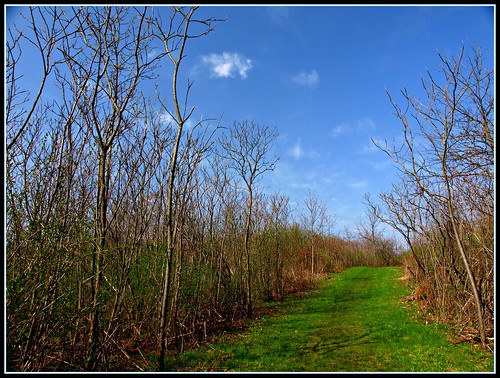
Hey wait… nothing spectacular? Do you see that blue sky? the green grass? The air is clear; the land is litter free. There are no obnoxious odors, loud noises, traffic sounds. The trees are beginning to green a bit, the grassy path is a spongy cushion under tired feet. Not spectacular?

Maybe it’s only an urban conservation park, 93 acres small, but it’s a piece of green that I visit many times each week. Located only a few minutes from my home, I have probably taken a thousand photographs of this land – prairie, savanna, woodland – in the last eight months. Of the 297 posts I’ve published, 35 contain photographs taken here in Owen Conservation Park – nearly 1 in every 8.

Owen Conservation Park, one of 14 conservation parks in Madison, sits on a hilltop overlooking the city’s west side. It was the farm and retreat of a University of Wisconsin professor, Edward T. Owen and tranferred into conservancy in the 1970s. Prairies and oak savannas are reclaiming the old farmlands, and the woods provide habitat for wildlife and birds. And they provide me with a place to unwind, hike, and enjoy my photography. For that, I’m pretty thankful.

If you are interested, here is the collection of this blog’s photos of Owen Conservation Park as the different seasons settled upon it – starting with a few photos of the fantastic wildflowers that are in bloom this first part of May and ending with the park captured in mid-autumn color. (You can also see how my photography skills have changed in the past 8 months. A few of those first photos are a little on the shaky side, but I’m glad I have them posted as part of the record of my journey of the last year.)

And the park really is a beautiful parcel of land in its many different moods.

Hiker’s Delights

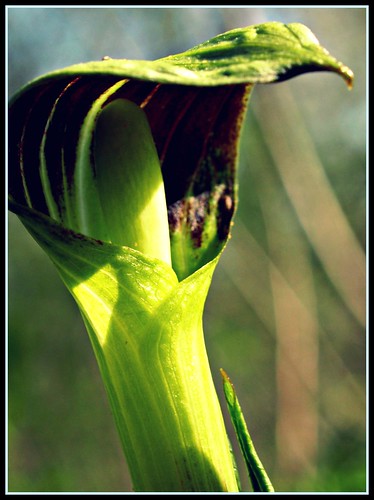
Jack Sticks Out His Tongue

My first Jack of the year. He was poking out of a mass of wild geranium leaves, the geraniums not in flower yet, and I almost missed him. Jack in the Pulpits are a favorite of mine.

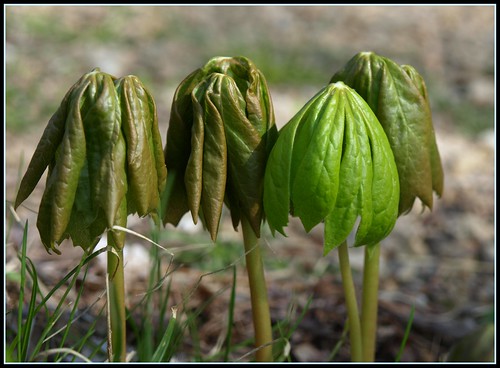
Emerging May Apples

And I found a huge field of May Apples just emerging. They should be in full bloom in less than a week, though what I love most about this plant is its foliage as it unfolds. Like a giant yawn when you have to throw your arms out wide, and stretch, too. A white five-petaled flower will tuck itself under the umbrella to complete the show.

One of my readers, Uphilldowndale from northern England, asked about the fruit. I rather forgot it has that fruit-y word, “apple”, in its moniker. For the record, it does have a soft, yellowy kind of fruit which can be eaten, mostly in marmalades, jams, pies, etc., though I’m not personally recommending it for I’ve never tasted it. Supposedly it is sweet and mildly acidic, though one source called it “peculiar”. Has anyone ever had a bite of a May Apple?

[where: Owen Conservation Park]

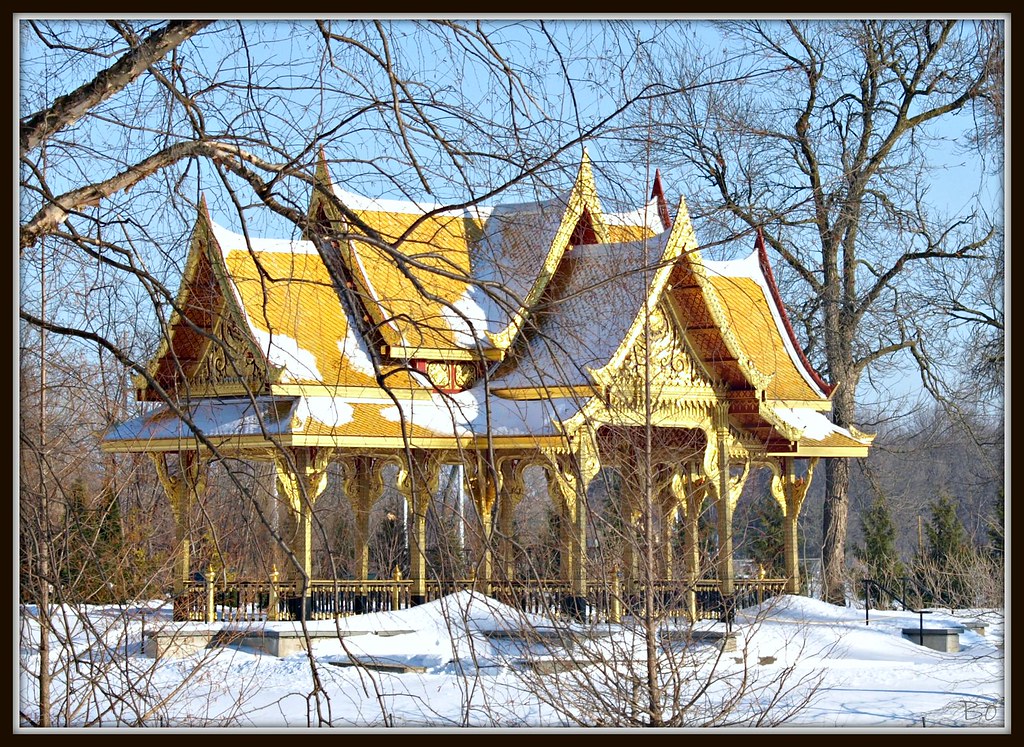
Thai Pavilion at Olbrich Gardens

Thai Pavilion

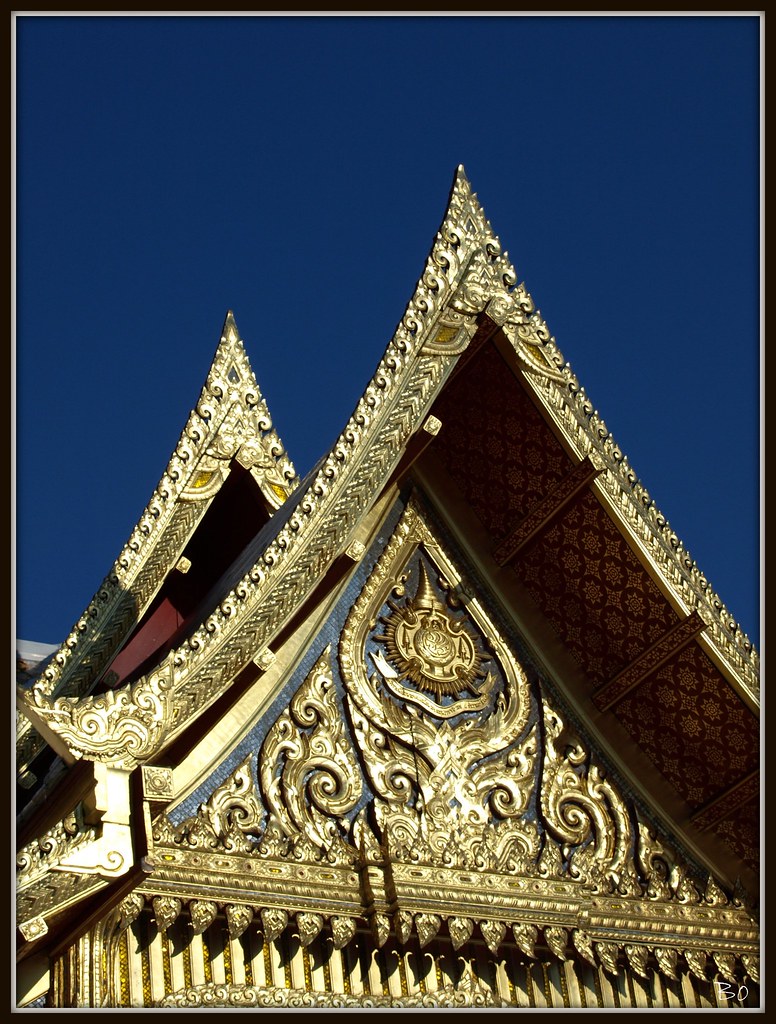
No nails, no screws, and no metal fasteners of any kind were used to craft the Thai pavilion that is the centerpiece of the Thai Garden in Olbrich Botanical Gardens in Madison, Wisconsin. It was assembled by Thai craftsmen in Thailand, then dis-assembled and shipped to Madison. The Thai artisans then re-assembled the pavilion in the Gardens.

The open-air pavilion, called a “sala” in Thailand, is 40 feet long, 22 feet wide, and 30 feet high. It was gift to the University of Wisconsin-Madison from the Thai Chapter of the Wisconsin Alumni Association and the government of Thailand through its king and bears the Royal seal of the Thai crown.

Thai Pavilion

The Gardens feature a large reflection pool and uses plants suitable for Wisconsin climate that give the feel of those found in a Thai garden. There are ornamental grasses with the feel of bamboo – tall and with cane stems. There are hardy, large leafed plants, shrubs and trees, pruned to mimic the look of tropical plants.These plantings are designed to promote a serene setting – de-emphasizing color and emphasizing texture and form.

I will post late spring pictures (in later May or June, hopefully) to show the pavilion with its gardens – the lovely pools, the decorative glazed water jars and the sculptured tree art. Without a cover of snow, it is even more spectacular, and something well worth waiting to see.

Here are photographs of the Thai Pavilion taken in June.