An Old Recipe for Scented Lavender Ink

Lavender from My Backyard Garden

Lavender from My Backyard Garden © 2008 Bo Mackison

Ever need to post something to calm and refresh yourself? That is what this simple photograph of lavender is meant to do for me this evening. I imagine breathing deeply in the plants and feeling a gentle relaxation overcome me.

I have had this recipe for many years, and have never made it, but maybe this August will be a good month to give it a try. My great-grandmother made scented inks every summer using a variety of garden flowers, including heirloom roses, geraniums and her very favorite, lavender.

LAVENDER INK

An ink that you scent with the flowers of the lavender plant will surely send a message of calm and enjoyment when the special recipient opens the envelope. What an added enjoyment to the message you send…

People do still write an occasional letter now and then — don’t they?

Here’s the recipe.

1/2 ounce lavender flowers, dried well
5-6 tablespoons of water (distilled if possible)
one small bottle purchased ink, black or dark blue

Crush the dried lavender flowers and simmer them in water for about 30 minutes – until there is 2 tablespoons of brown liquid left in the pan.

Strain through a piece of cheesecloth and mix with ink when fully cooled.

Enjoy.
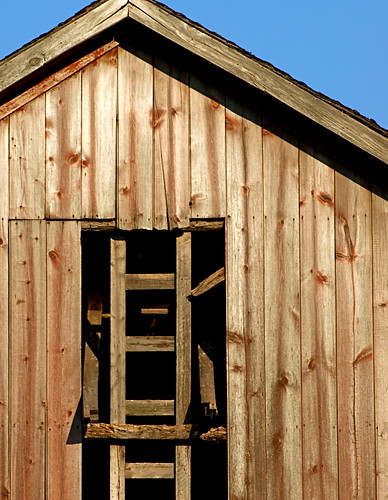

Time Worn Barn

Red Barn

Red Barn © 2008 Bo Mackison

What’s Blooming in the Prairie?

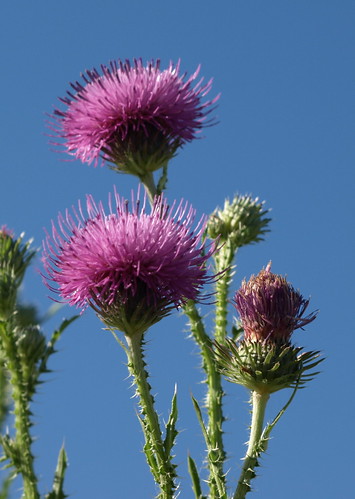
Thistles in the Blue

Thistles in the Blue © 2008 Bo Mackison

Thistle, prickly to the hand and quite noxious to other plants as it tends to take over and monopolize the land to the detriment of other plants. The name “thistle” is an Anglo-Saxon word meaning “to stab” – the plant is appropriately named, full of thorn set as a defense against crawling creatures after the flowers’ extremely sweet nectar. Birds and butterflies can easily approach though, and goldfinches are especially fond of both the seed as food and the down as nesting material.

Butterfly Weed

Butterfly Weed © 2008 Bo Mackison

Butterfly Weed, as the name implies, is an irresistible plant for butterflies. The huge domes make lovely landing pads and dining palaces for many adult butterflies and the foliage feeds the larvae of the monarchs. It is the orange member of the milkweed family.

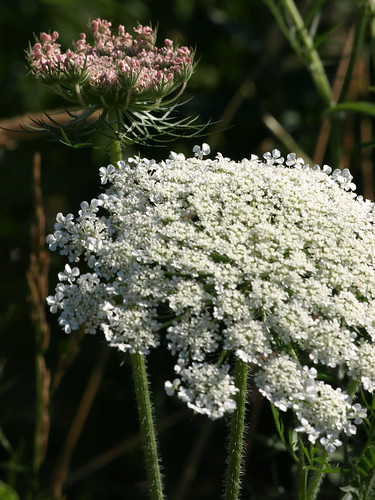
Queen Anne's Lace

Queen Anne’s Lace © 2008 Bo Mackison

Queen Anne’s Lace, also called Wild Carrot. Its leaves, stem and root taste and smell like the garden carrot, its taproot can be eaten as a vegetable or roasted as a “coffee”. And legend says that if the “flowers of the lace are mixed in sweet red wine and drunk long into the evening” it acts not only as a love potion, but also as a contraceptive. Can’t speak for or against that lore.

Milkweed

Milkweed © 2008 Bo Mackison

The Common Milkweed might as well be called the Monarch Butterfly Plant, as it is essential to all stages of that butterfly’s existence. They lay their eggs on the plant; the caterpillars spend their entire lives feeding on the leaves. Once mature, they build their chrysalises on the undersides of the leaves, and when the butterflies emerge from their cocoons, they feed on the flowers. The plant also provides protection to the Monarchs as the sap the caterpillars feed on is distasteful and keeps away predatory birds.

Opening in the Sun

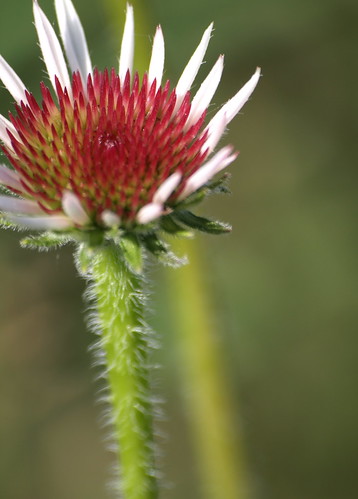
Purple Cornflower Beginning Its Bloom

Purple Cornflower Beginning © 2008 Bo Mackison

A pale purple coneflower just beginning to open.

This plant is common in Wisconsin and found in dry prairies and open savannas from Nebraska and Iowa east to Arkansas and Indiana. Farther east, it is seen occasionally usually an escape from cultivation. Illegal digging represents a major threat to this plant in some regions.

Funhouse Mirror?

Funhouse Mirror?

Funhouse Mirror? © 2008 Bo Mackison

Like Abbott and Costello?