Iowa Sculpture

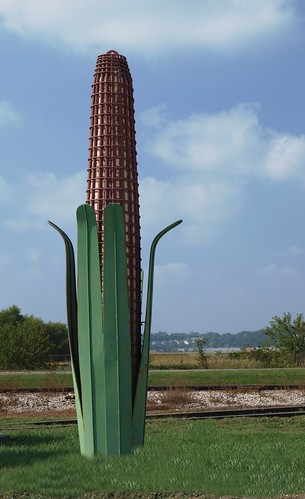
Corncob Sculpture

Corn Sculpture ©2008 Bo Mackison

You never quite know what you are going to see while driving down the highway in Iowa. Near Iowa City, I came across this interesting metal sculpture of – yes, of course – a yellow cob of corn in a green husk.

Because of popular request, I have asked Robin of Bountiful Healing to share her links for interesting vegetables and fruits, too. Always aiming to please and keep the customers happy.

So, yes, Robin has graciously supplied me with the site to her “veg porn” as it is lovingly called.

First the asparagus – you have to look for the second photo.

And if you still are curious, then there are flowers that also got in the act.

So there…enjoy. Robin has a lot of other great photos to see, so while you are there, explore a bit.
Red Sumac

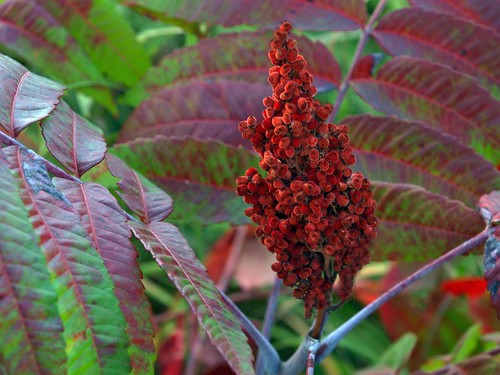
Smooth Sumac

Smooth Sumac © 2008

Sumacs are famous for their red foliage and fruits throughout much of autumn.  The fruits remain over winter and even throughout the following spring, providing much needed winter food for birds. It’s not that the birds are particularly fond of the berries (the berries are really drupes as they have a pit, not a seed), but that it is one of the few available foods. Moose and deer, however, are more than happy to chomp on the foliage and fruits, and often crop the bushes quite close to the ground.

I think the sumac is at its most attractive when the fruits are bright red, and the red berries are surrounded by foliage that is just turning from greens to blue/purples to reds.

Milkweed Fluff

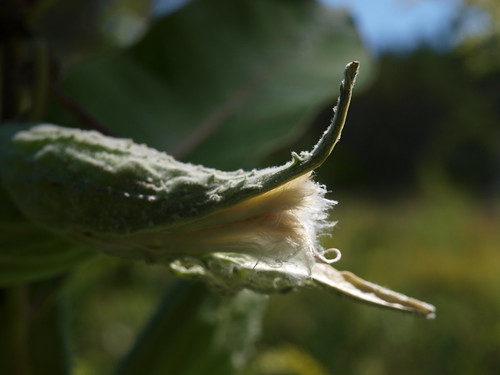
Milkweed in Autumn

Milkweed in Autumn © 2008

The Common Milkweed, a native plant in Wisconsin, has rough textured pods that contain thousands of seeds attached to strands of silky down. As the pods split in autumn, the seeds open like tiny parachutes and travel on wind currents to a new site to seed.

This silky stuff has been used creatively throughout the years. Settlers in the 1700s and early 1800s used the fluff to fill their pillows and mattresses. In the 1860s, thread from the down was made into socks and purses. During World War II, schoolchildren collected milkweed pods and the pods were sent to central processing locations. The down was used to fill life preservers and to line the uniforms of the United States Air Force. Milkweed down is extremely bouyant and a few pounds of this spinnery stuff can keep a 150 pound person afloat in water.

Seth Peterson Cottage, Part II

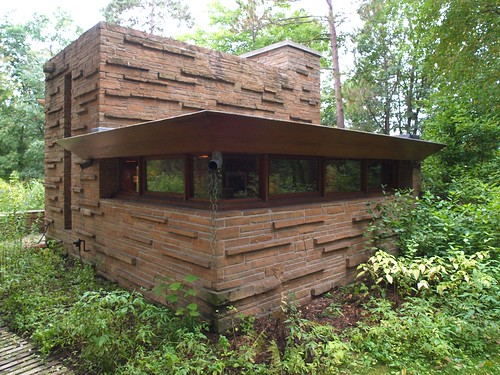
Seth Peterson Cottage Exterior

Seth Peterson Cottage Exterior © 2008

Another set of photos from the cottage that was one of Frank Lloyd Wright’s last commissions.  Located on a cliff overlooking Mirror Lake in central Wisconsin, the building fell into near ruin. A private conservancy group negotiated with the state of Wisconsin to rehab the site.

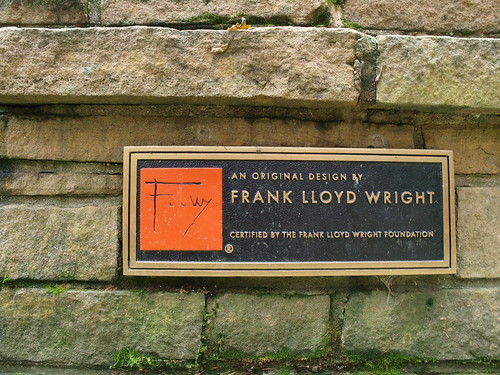
Frank Lloyd Wright Tile

Frank Lloyd Wright Tile © 2008

Wright affixed his signature red tile to his designs when completed. The Seth Peterson Cottage was built after Wright’s death and supervised by one of his associates. The Frank Lloyd Wright Foundation agreed to the use of this plaque with an orange tile, not the red tile used by the architect himself.

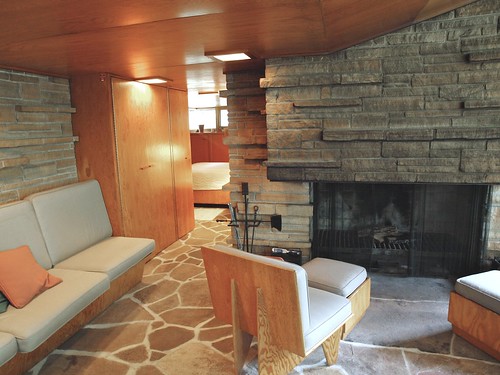
Main Room and Central Fireplace

Main Room and Central Fireplace © 2008

The inside is typical FLW. It is available for nightly rental, though there are no reservations available until December of 2009. I think it would be a pretty fine place to reserve for a night. Think of the photographs you could set up.

Black Box

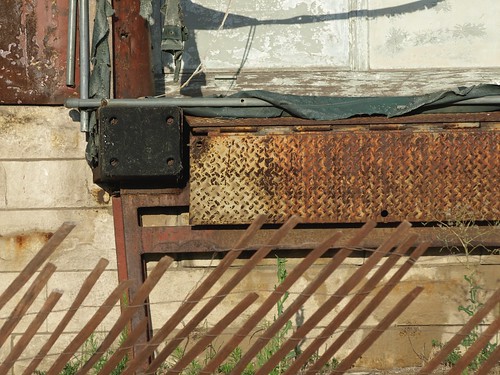
Quincy Paper Box Company

Quincy Paper Box Company Composition © 2008

Sometimes I am simply drawn to texture and pattern. There is so much going on in this photo, and yet there is nothing going on at all.