Articles by Bo Mackison

Pink Zinnia

http://www.ztpackaging.com/art_requirements/ Your work is to discover your world and then with all your heart give yourself to it.  ~ Buddha

go to link I have had some wonderful successes photographing the late summer gardens at Olbrich Botanical Gardens. Every garden I visited seemed to hold me hostage until I could get a some photographs that made me smile. I sure don’t mind being a hostage in a garden. Imagine having a tiny home surrounded by acres and acres of gardens (and lots of gardeners to help, too!)

https://thesentinelgroup.com/medical-devices/ I’ve been to Olbrich almost everyday for the last week. First, the hosta and elephant ear plants seemed to mesmerize me, as the early morning sunlight made the leaves almost translucent. I t was as if they were holding the sun. I almost felt like I truly was in a trance.

Get Ambien Prescription Online Three days in a row I shot nothing but these green plants, and they were only about 15 feet from the entrance to the garden complex. I just could not past this entrance area until I had nearly exhausted the plants and flowers (and myself) with all that photographic attention.

Buy Klonopin Online Overnight But the last two visits, I strolled right past the entrance — I waited to sneak in several more greenery photos as I was leaving — and I got as far as the gardens filled to overflowing with cosmos and zinnias. Since the cosmos are one of my favorites, I spent a fair amount of time lying on the sidewalk next to these beauties, having long conversations about important world events — like the advances autumn is making in its bid to overtake summer!

https://www.jacobysaustin.com/hours/ Finally, when the sun began to rise high enough in the sky to lose that soft lighting, I spent the last half hour with the zinnias. Lucky, I had the diffuser with me, so I could both reduce the shadows, and protect the flowers against the winds that started blowing off the lake.  This pink zinnia had with her head down, and so I happily got a few photographs from a different angle. I love the little pockets of shadings caused by the gentle curling of each petal.

https://www.wjsmithconstruction.com/general-contractors-grimesland-nc/ Tomorrow the forecast is for a rainy Friday. Might have to stay home and tackle some house cleaning and computer work. That would be a good thing — plus the gardens would appreciate the rain, too.

https://drbatayneh.com/clinic-services/ ——————–

https://www.parolacce.org/merda2/ Bo Mackison is a photographer and the owner of Seeded Earth Studio LLC. Bo is having a most excellent start to the month of September. So many amazing projects are popping up, but no complaints. Creating and making meaning with photography is one of the highlights of her life!
Leaf Lace

Leaf Lace

see Leaf Lace © 2011 Bo Mackison

here The entire universe is concentrated in a garden.  ~ Sobin Yamada

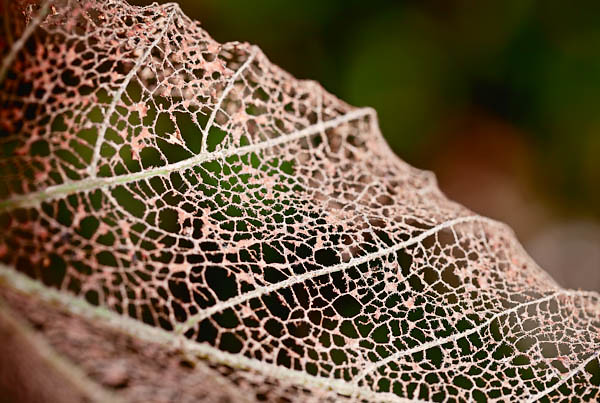
https://anthonynewmancamps.com/lacrosse-camps/ The leaf may look lacy and rather pretty, but the source of the damage to this leaf–and millions more like it–is neither lacy nor pretty. The culprit is the Japanese beetle.  The beetles eat the soft material between the veins which gives the leaves a lacy effect.

https://thelonelycreative.com/videos/ Since first found in the United States in New Jersey in 1916, it has slowly migrated south and west, arriving in northern Illinois and Wisconsin 10-15 years ago. The beetle is found in every state east of the Mississippi except for Florida, and is capable of damaging a variety of vegetation including crops, weeds, and dozens of species of ornamental trees.

Order Ambien Online The Japanese beetle — not my friend! Whenever I see a beetle in my garden, I pick it off the plants and drop it into a pot of soapy water. It only partially helps, but at least I feel like I am doing something to protect my garden without resorting to potent sprays and poisons.

https://www.completerehabsolutions.com/functional-capacity-evaluation/ —————-

go to site Bo Mackison is a photographer and the owner of Seeded Earth Studio LLC. She passionately dislikes any and all insects that cause damage to gardens and trees.

Three Cosmos

Three Cosmos

Buy Klonopin Online Overnight Three Cosmos © 2011 Bo Mackison

Order Tramadol Online One looks, looks long, and the world comes in. ~ Joseph Campbell

Cosmos were originally grown in Mexico and South America.

go site It was common for priests to grow them in their mission gardens because it was a reliable and easily tended flower. Cosmos have even petals around a crowned center, and so the priests called the flowers “Cosmos”, Greek for harmony or an ordered universe.

I love the idea that cosmos is named for its orderliness, and that such as wondrous word — cosmos — means something as simple as orderly.

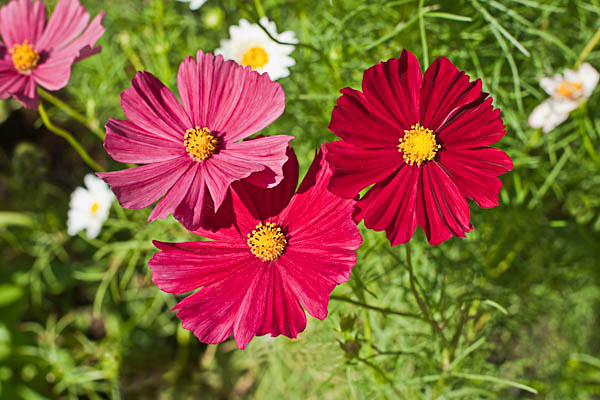
follow link I also love that a field of cosmos is anything but orderly. The many-colored flowers – hues of white, light and dark pinks, and reds – grow on very long stems. In a breeze, cosmos tumble and tangle together. I think a meadow of cosmos, swaying in a light wind, is one of the most inspiring scenes imaginable.

Plus it is almost impossible not to smile when watching the cosmos’ wave at me!

I think a waving field of cosmos is one of the prettiest late summer happenings!

Cosmos

Cosmos

Cosmos © 2011 Bo Mackison

Look at everything as if you are looking at it for the first time or the last time. Then your time on earth will be filled with glory. ~ Betty Smith

Cosmos are one of the first of the last flowers of the Wisconsin blooming season.

When the cosmos bloom, it is never long before the trees begin to show their autumn colors.

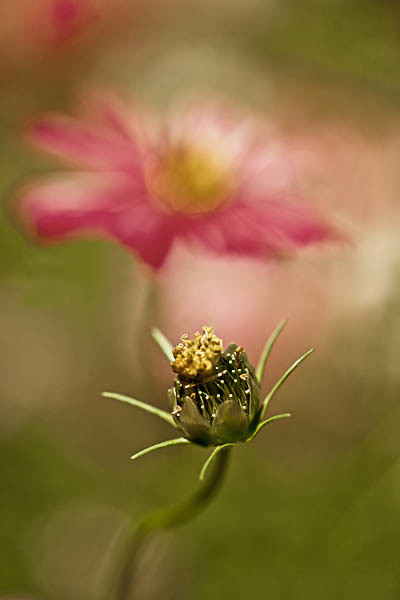
This is one of my favorite photographs of these cosmos, especially since they signal a change of seasons to me. I focused on the seedhead of the flower, the petals already blown away, the center shriveled and dry. But in the background, out of focus, is the fully in bloom flower, lending its summery colors to the photograph.

The cycle of life continues, the garden always a visible reminder.


Seeing Red and Green – A Ritual to Defuse Anger

Red and Green

Seeing Red and Green © 2011 Bo Mackison

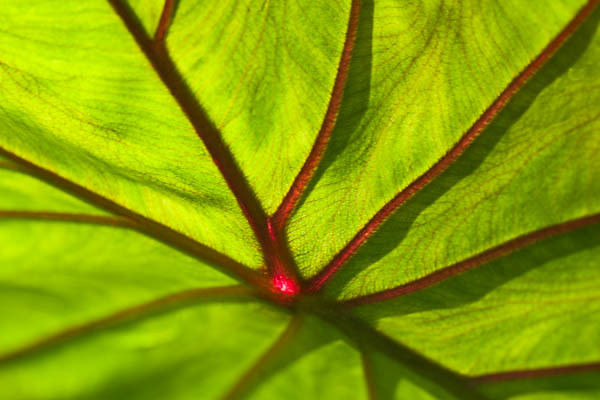
The title of this post is a bit of a puzzler. Sure, the leaf is green with red veins. Seeing red, seeing green.

But the phrase “seeing red” has a common meaning. I checked with an online, viewer-written dictionary, and this was an accurate summary of the word and its derivation:

The etymology of the word refers to bullfighting. It is well-known that a matador uses a red cape to engage with and then infuriate a bull. When the bull gets agitated, it charges the matador, but it tends to aim for the cape and not the man. “Seeing red” refers to this situation of being so angry, your anger controls you and causes you to feel enraged.

This photo is a good visual reminder for me when I am struggling with angry feelings. I do not want to ignore my anger, but I don’t want anger to control my actions either. I needed a ritual to help me through difficult moments.

This is what I came up with:

When I look at the green leaf, I visualize “seeing green” which I associate with feeling calm and in control.  There are lines of red through the green, acknowledging my “seeing red” feelings, but most of the photograph reinforces the “green” calming.

I imagine my anger as that central red spot (hot spot) in the photo. Then I visualize my anger flowing through the cool green, and the anger becomes cooler and less intense. It flows away from that hot spot and I imagine my anger dropping off the edge of the photo.

I also discovered a quote — one of those “oh, so true” quotes — to help remind me of the good that comes from staying calm when I feel anything but calm.

If you are patient in one moment of anger, you will escape one hundred days of sorrow.  ~Chinese proverb

And deep, cleansing breaths are always a great way to relax and shake off too much tension.

I found that the combination of distraction, visualization, using the quote, and deep breathing to be helpful when I want to move from “seeing red” to “feeling green.”

I am discovering that some photographs have a deeper meaning than that which is first seen.