Articles by Bo Mackison

A Morning Walk in Owen Conservation Park

Parking Lot Nursery

https://www.appliquecafeblog.com/about/ Bucket Nursery © 2013 Bo Mackison

Purchase Tramadol Without Prescription A picture of many colors proclaims images of many thoughts. ~ Donna Favors

source I took the opportunity on a recent sunny morning to walk in Owen Conservation Park, a park only a few minutes from my home. When I began making photographs in a serious way – by that I mean making photos as a daily practice – Madison Wisconsin’s Owen Park was one of my first haunts. I recall those early mornings in an October six or so years ago, when I struggled with light and exposure, aperture settings and shutter speed.

click here Often, I had no clue what settings I might prefer to use for a certain feel, and so I simply took pictures, hundreds of pictures. Every day. And after many months of making photographs and studying them, I began to l get a feel for my camera and what it could do. It was almost a surprise to me, several years later, when I realized I could work my camera’s settings without much thought. What a glorious discovery that was!

Valium 10Mg Buy Online It is my plan to walk this park every week – note the changes as the summer season approaches and the days warm. I’ll post the photos from my weekly explorations, but I’m not going to write much, except to add a few quotes. Mostly, I want to keep a record of my weekly excursions throughout the park, throughout the summer. And see what there is to see.
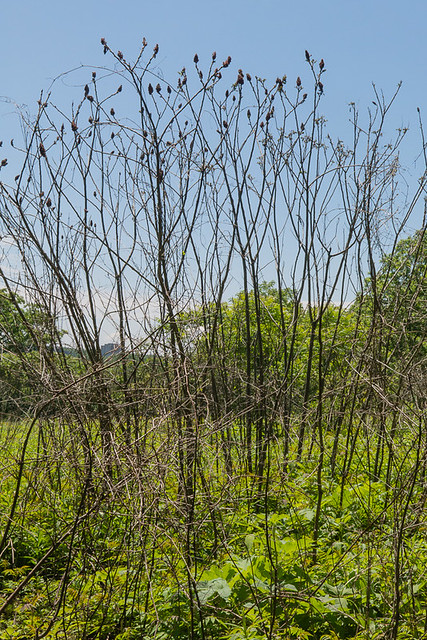
Bones of Sunflowers

Buy Clonazepam Online Overnight Prairie Bones © 2013 Bo Mackison

https://www.jacobysaustin.com/grandmas-strawberry-cake/ “Solvitur ambulando.”

https://geneticsandfertility.com/bayfront-park/ Latin translation — “It is solved by walking.” ~ Diogenes
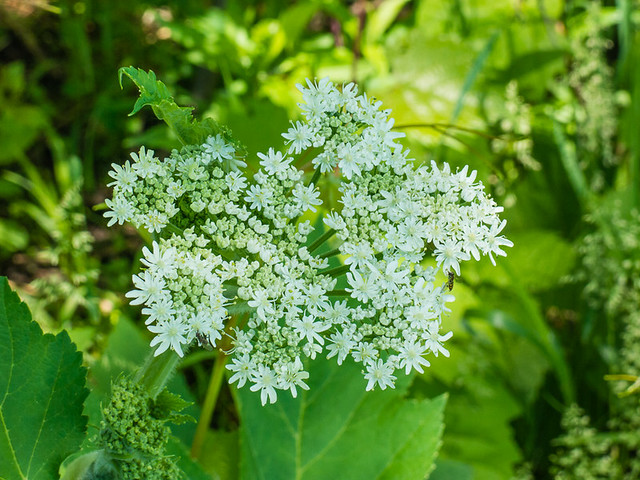
White Flowering Shrub

https://drbatayneh.com/appointment-form/ White Flowering Shrub © 2013 Bo Mackison

https://rmscherubimhealthcare.com/doctors/dr-jason-roy/ In all things of nature, there is something of the marvelous. ~ Aristotle
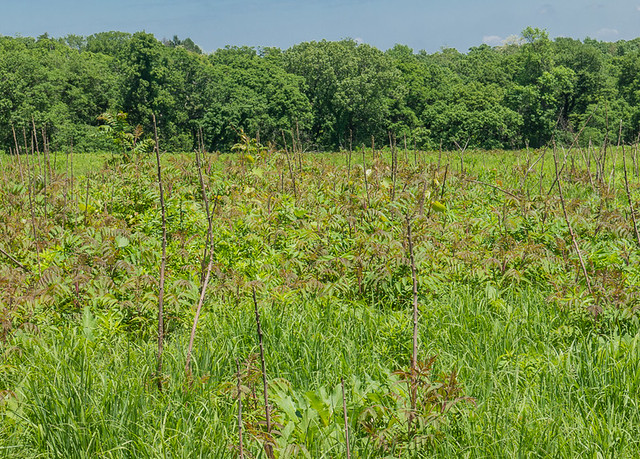
Owen Park

Owen Park © 2013 Bo Mackison

Change is inevitable. Accept the old and embrace the new. Blend the two and that is you. ~ Anon
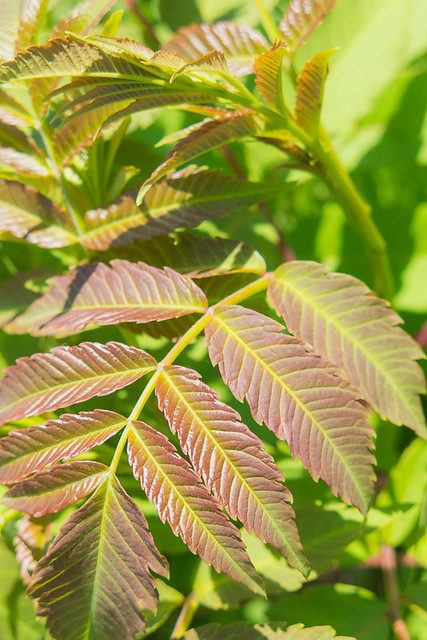
Sumac

Sumac © 2013 Bo Mackison

Beauty surrounds us. ~ Rumi
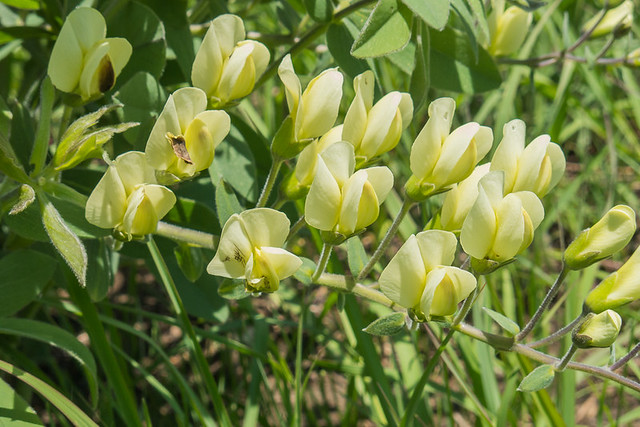
Indigo

Indigo Blossoms © 2013 Bo Mackison

The sun does not shine for a few trees and flowers, but for the wide world’s joy. ~ Henry Ward Beecher
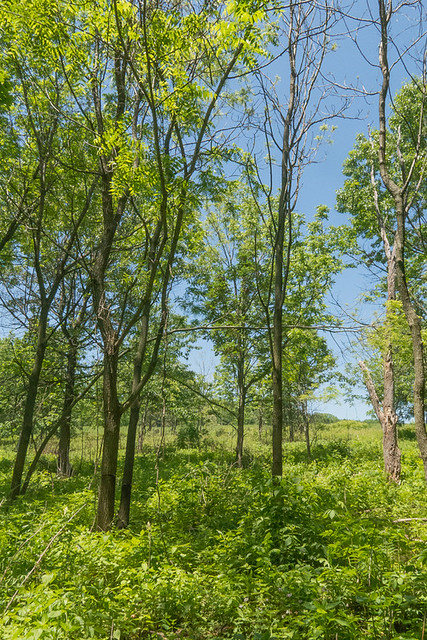
Spring Trees

Spring-Green Trees © 2013 Bo Mackison

I wish the days to not be cheap, but sacred.
I wish the days to be as centuries, loaded, fragrant. ~ Ralph Waldo Emerson
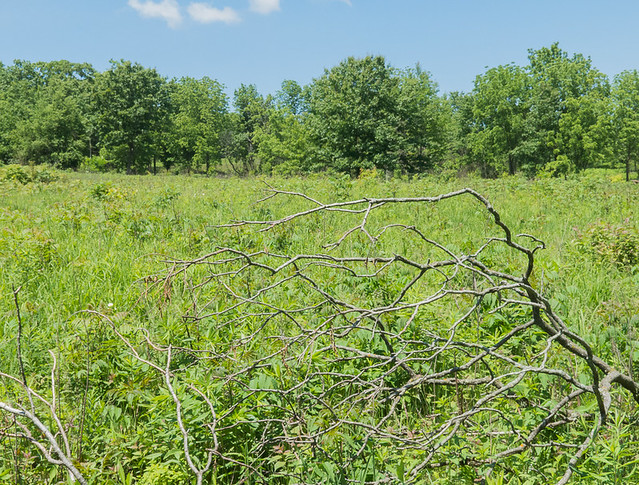
Owen Park

More Prairie Bones © 2013 Bo Mackison

He who wishes to explore Nature must tread her books with his feet. ~ Paracelsus
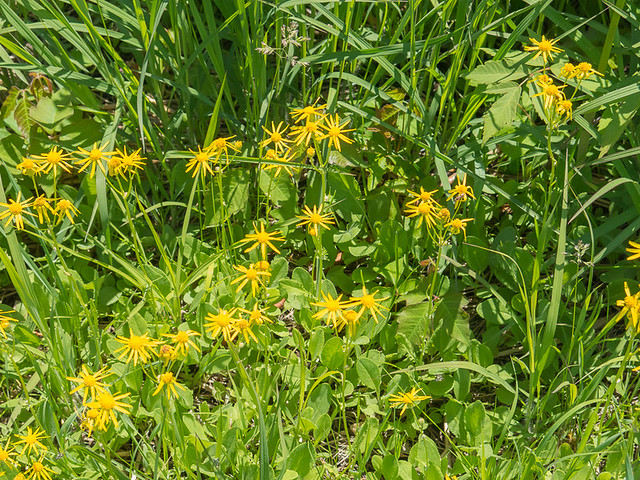
Spindly Petals, Spring Yellow Flower

Spindly Petals © 2013 Bo Mackison

All of nature begins to whisper its secrets to us through its sounds. Sounds that were previously incomprehensible to our soul now become the meaningful language of nature.
~ Rudolf Steiner
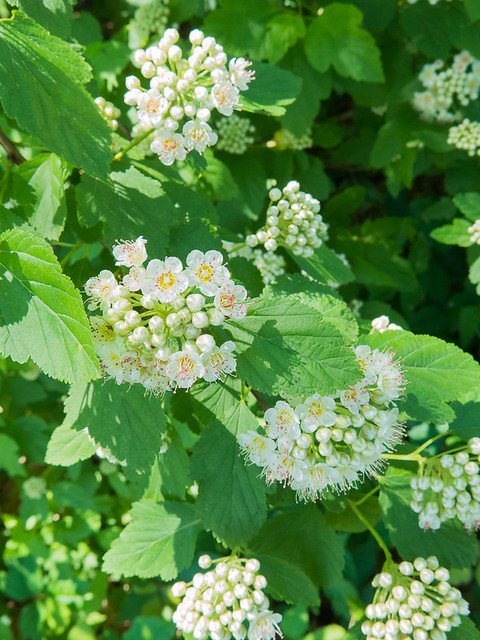
Spirea

Spirea Blossoms © 2013 Bo Mackison

He who sees into the secret inner life of the plant, into the stirring of its powers, and observes how the flower gradually unfolds itself,  sees the matter with quite different eyes — he knows what he sees. ~ Johann Wolfgang von Goethe

These photographs of Owen Conservation Park on Madison’s Far West Side are from June 7, as the hour approached noon. The days before this day had been rainy and so the park was lush and green. And a bit damp, too. The temperatures were in the mid 70s, and the skies were mostly clear, the most blue the skies had been in many a day.

————-

Bo Mackison is a photographer and owner of Seeded Earth Studio LLC. She explores wherever she goes, with and without her camera.
A Tree, a Nest, a Dream

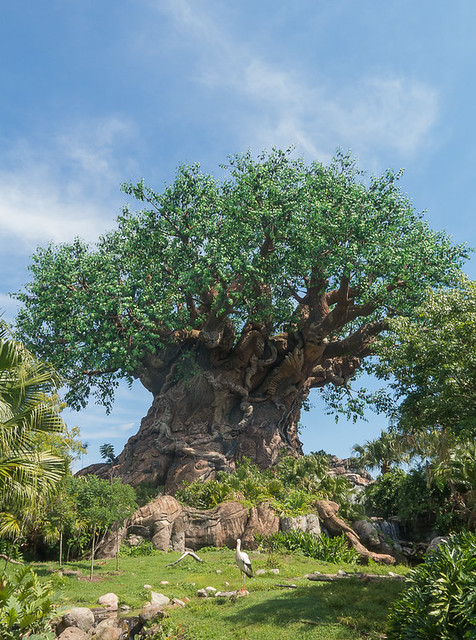
Tree of Life ©2013 Bo Mackison

Animal Kingdom’s Tree of Life © 2013 Bo Mackison

“Without leaps of imagination or dreaming, we lose the excitement of possibilities. Dreaming, after all is a form of planning.”   ~ Gloria Steinem

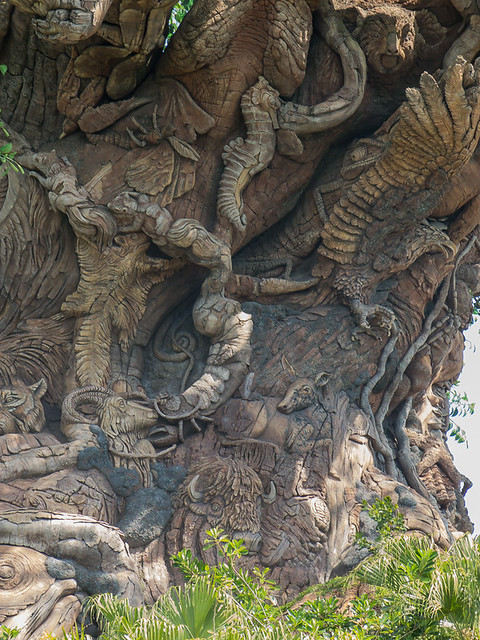
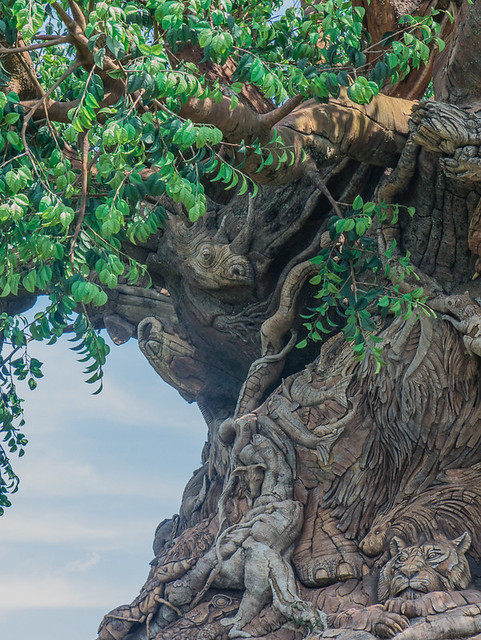
It was only a few weeks ago that I spent time at Disney World with my two daughters. While there, I visited Animal Kingdom for the first time, and I saw the centerpiece of the park, a re-creation of a huge Baobab tree. The tree has over 350 animal had sculpted in its concrete bark. The leaves were individually crafted in five colors, all 103,000 of them. It was quite the tree, even if it was born of a man’s creative vision.

We didn’t spend time near the tree, and though I admired it from afar, it wasn’t until I returned to Wisconsin that my interest in this unusual Baobab heightened. I researched the history of the tree, and discovered that this particular tree is called the “Tree of Life”.

I was curious, because this tree, or actually a variation of it, appeared in a recent dream. It was one of those infrequent dreams for which I had complete recall (or so I believe) and I wrote it in detail in my journal. Now I find myself frequently replaying the dream sequence in my mind. I think it’s an interesting dream, and important, too.

And so I’m sharing…

Tree of Life - with Animal Carvings

Tree of Life – with Animal Carvings © 2013 Bo Mackison

This is my dream: I am in a nest at the top of a tree similar to the Tree of Life, so high that my nest — large and very comfy, and woven out of a soft, gauzy material resembling bubble wrap — seems to barely touch the leaves. At first I am able to lean over the nest — it is about waist-high — and see the carved animals on the tree. The animals are alive and friendly, and communicate through facial movements and eye contact. I most remember speaking to a hawk that is very near the nest.

It is a sunny day. I can see an infinite ocean from one side of the nest; the other side overlooks a deep forest, far below, just the tree tops are visible. I am alone, except for one visitor — a very large, very dark raven that has intense, emerald-green eyes.

The raven keeps coming to the nest. He circles the nest, darting about, then pecks at my head while I try to protect myself with my arms. Finally he snatches a single hair from my head and flies away. He does this repeatedly. I am fearful when the raven pecks at me and pulls my hair, but after he disappears from sight, I feel very alone and wonder if he will return.

This happens a dozen times or so. All the while, the skies gradually darken as evening approaches. Then I notice several things. The nest shape shifts and it is now very deep. I can no longer see over the sides nor communicate with the animals on the tree. I can’t see the ocean or the forest. I can only see the darkening sky. A few stars appear, and then the night sky flickers above me. I am in complete darkness except for the far away stars.

Tree of Life - with Animal Carvings

Animal Carvings © 2013 Bo Mackison

Then the raven returns. This time, he flies towards the nest from high above me, soaring in circles, drawing closer and closer. He carries a light. When he is very near, I notice his claws have turned into the hands of a human. In his hands he carries a crystal globe about the size of a large softball. The raven hovers over my nest and gently places the crystal ball into my open hands. Then he soars away.

I hold the globe – it is perfectly spherical and glowing brightly. When I look into the globe, I see a sun as it brightly illuminates the nest, my surroundings, and me.

—————–

Bo Mackison is a photographer and owner of Seeded Earth Studio LLC.  She explores wherever she travels. And occasionally her travel experiences follow her home and appear in her dreams. She still marvels at the idea of holding a crystal ball filled with sunlight.

Garden Peony in Amana

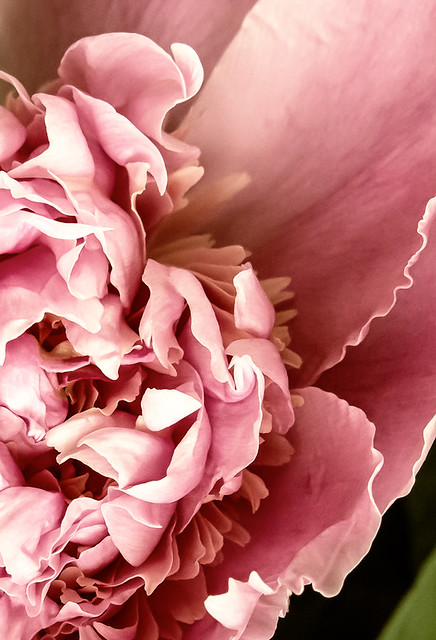
Vintage Peony

Vintage Peony © 2013 Bo Mackison

“The best art of beauty is that which no picture can express. That said, the mere act of looking at your surroundings with intention and perhaps the anticipation of finding a suitable subject, makes you more aware of the diversity of nature. ~ Sir Francis Bacon

Sherpa and I traveled this weekend, a quick trip to visit family. On our way home, we stopped at the Amana Colonies near Iowa City, Iowa. The Colonies were settled by Pietists in the 1850s, immigrants from Germany who came to America to practice their religious faith in a communal setting. The settlers received all that they required — home, medical care, meals, a job, and schooling for children. Everything was shared.  Farming and the production of fabrics, both wool and calico, supported the community, but everything from furniture making to brewing, were an important part of the community. Well-crafted products became a trademark of the Amanas.

During the farm economic crisis in the 1930s and the followers’ desire to live a more independent life, the Colonies adapted to changing times and the communal way of life transitioned into a profit-sharing entity, The Amana Society.  Private enterprise was encouraged and the Amanas were able to thrive.The seven towns which comprise the colonies were declared a National Historic Landmark in 1965. Today the Amana Colonies attract nearly a million visitors who come to experience a place where the past is cherished and where hospitality is a way of life.

We found it a joy to walk the streets and browse the shops and art galleries after being car-bound for many hours. Sherpa even found a brewery and sampled one of their fine ales, while I  had a taste of their ginger ale. But I most enjoyed the intricate flower gardens in full bloom. Te Iowa River, which runs near the town was at flood stage, and so we had to take a few detours to get on the roads heading north and to Wisconsin, but we saw some amazing countryside on the back roads.

~~~~~~~~~~~

Bo Mackison is a photographer and owner of Seeded Earth Studio LLC. She explores, with and without her camera, wherever she travels. There is always something new and interesting to see or do.

Gratitude – A Desert Wisdom Card

Gratitude - A Desert Wisdom Card

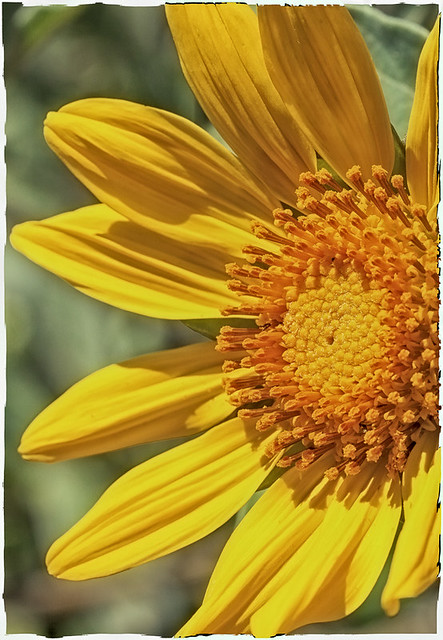
Sunny Sunflower © 2013 Bo Mackison

Gratitude unlocks the fullness of life. It turns what we have into enough, and more. It turns denial into acceptance, chaos to order, confusion to clarity. It can turn a meal into a feast, a house into a home, a stranger into a friend. ~ Melody Beattie

Sunflowers abound in the desert garden, grateful for the warmth.

When I see a sunflower with its face turned towards the sun, I am reminded how simple it is to turn my face to the sun. To give thanks for its presence, its warmth. To give thanks for all that is good – the blade of grass growing through pavement cracks, the rainbow peeking from stormy clouds, a bright flower adding color to the moment.

Gratitude makes sense of our past, brings peace for today, and creates a vision for tomorrow.
~ Melodie Beattie

Everyone knows that it is the polite thing to say thank you.

But university studies throughout the world, including a recent study from University of California at Berkeley, find that gratitude has positive physical and emotional effects. A gratitude practice — not just an occasional or perfunctory thank you — offers proven benefits: stronger immune systems, lower blood pressure, a measurable increase in joy, optimism,happiness, generosity and compassion, and fewer feelings of loneliness and isolation. Gratitude is not only good for the world, it is good for the individual.

“Cultivate the habit of being grateful for every good thing that comes to you, and to give thanks continuously. And because all things have contributed to your advancement, you should include all things in your gratitude.”
~ Ralph Waldo Emerson

It is easier to be grateful for the joys of our life, but even the rough spots deserve our gratitude.

We are the sum of our experiences – the difficult days, the soured relationship, the trip of a lifetime, a chance meeting of a stranger who becomes a treasured friend. Each experience has its own lesson.

GRATITUDE offers questions/reflections for journal writing, art activities, calls for action:

  •  The lessons we learn from each life encounter are valuable. Write about the gifts received, not only from the brightest of times, but also from shadow experiences. Notice your response as you write. Seek the hidden gifts in each experience and accept all gifts with gratitude. How easy or difficult is this process for you?
  • There are so many advantages to beginning a gratitude practice and it requires so little time, this may be one of those practices that you won’t want to skip. One of the main findings of gratitude studies is the effectiveness of practicing gratitude on a schedule. It is the habit — whether it be daily, three times a week, or weekly — that produces the benefit. There are many ways to begin or add a gratitude habit to your life:
    • Write your gratitudes in a gratitude journal. Write 5 a night. 10 every morning with your coffee or tea. Or set aside ten minutes and write until the timer rings. A gratitude journal also makes for a wonderful read when you need a pick-me-up.
    • Find a partner and play the gratitude game at a scheduled time. Tell each other 5 things for which you are grateful. Or take turns mentioning a gratitude while on your daily walk —  around the block, through your garden, to the mailbox and back.
  • Gather a collection of postcards. Pick up a few at your local drugstore, college bookstore, or tourist trap. Buy postcard stamps, too. Send thank you postcards. Everyone loves to receive a written thank you note.  Keep it simple, but be specific. “Thank you for listening to my worries at midnight.” “Thanks for the zucchini from your garden.” Thanks for taking care of my cranky cat.”

Claiming My Lineage – Grandma Prudie

Remembering Grandma

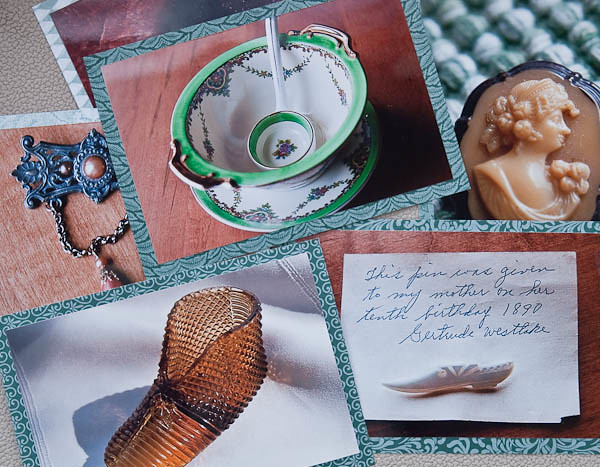
Remembering Grandma © 2013 Bo Mackison

A grandmother is a little bit parent, a little bit teacher, and a little bit best friend. ~ Author Unknown

*** In Jen Louden’s TeachNow course, each participant is “invited to become a story gatherer and story creator,”  and to “claim and own our authority and lineage” in order to better step into the teacher we are (or are becoming). In order to claim my lineage, I recalled past teachers in my life – childhood, youth, student, adult – and identified those people, places, books, experiences — positive and negative — that were influential in shaping the person I am today.

This post is the second in a series on gathering stories and claiming my lineage.

I rocked hard in Grandpa’s rocker as I watched the kitchen clock. The minute hand barely moved. I’d waited nearly an hour. My Great Grandma Prudie had promised we’d pull taffy that morning, but the day was half over. Prudie kept her promises, so I practiced an uneasy patience.

We had watched The Lawrence Welk Show the night before – Prudie, Grandma, Grandpa, Dad and Mom and me. After the show, Prudie had looked at me with her trademark pixie grin nearly hidden in her wrinkled face.

“Bo, let’s go in the kitchen and check out the pantry. Let’s cook tomorrow.” I was always game when Prudie began a kitchen project which mostly involved satisfying her occasional sweet tooth. Prudie at eighty-one no longer cooked the family meals. After 60+ years of kitchen responsibility, she’d handed her apron over to her daughter, grand-daughter and great-granddaughters. But she occasionally enjoyed a kitchen adventure with me.

My unusual family living arrangement was one of my childhood blessings, and surely is a part of my creative lineage. Prudie was my mother’s mother’s mom. She lived in the first floor apartment with my Grandpa and Grandma, although her bedroom was in the back of my family’s upstairs apartment. My mother, father and I lived in an apartment on the second floor, and my bedroom was carved out of an attic space on the third floor. The spaces were a mix and match affair, few doors, no locks. I wandered freely from adult to adult, and learned by watching and doing the things they were doing — sewing, gardening, knitting, woodworking, cooking and baking. It was an endless potpourri of activity.

Prudie was a storyteller, and as long as my mother and grandmother were out of earshot, Prudie discussed any subject that came to her mind.  My mom and grandmother often forbade me to listen to Prudie’s tales, but Prudie only waved her hand at them in dismissal. “Pshaw!” she’d mutter, and then laugh.

Prudie thought children should learn about “real living.” She talked about life, even when life didn’t include Princesses and Prince Charmings.  Especially then.

She told me about marriages that were not the “happily ever after” kind. When Prudie was only nineteen, she’d married a railroad man. It was 1900. My grandmother was born a year later. When baby Pearl was a week shy of her first birthday, her father left for work, saying he’d be gone a fortnight, but he never returned. Family life wasn’t what he’d envisioned.

So Prudie and Pearl temporarily moved in with family while my great grandma took a practical nurse’s course by mail. She memorized two medical texts and some practical nursing books. Then she worked as a licensed practical nurse, caring for people in their homes, until she met the man she married when my grandmother was in high school.

The medical textbooks she studied from in 1902 lined the shelf of her bedside table throughout my childhood. Prudie let me page through the books whenever I wanted, never censoring the content. We would page through her Human Anatomy book as casually as we paged through my Little Golden books. The diagram of the body’s circulatory system in red and blue ink was equally as interesting as Brer Rabbit’s adventures.

“A child’s curiosity is a good thing,” she would say. “Children should be exposed to ideas, even ideas that are out of the ordinary or strange. Life is strange.”

We discussed women’s rights in detail. (“Women are just as smart as men, we can do anything with our minds they can do. You remember that. You wait and see. Your world will look a lot different from the world I grew up in.”)

We discussed education. (“You keep to your studies. That’s your ticket to the big world. No one’s ever gone to college in our families, but that’s no reason to stop you from stretching your wings. You go to college. Learn something you really want to learn.”)

We discussed relationships. (“Don’t ever stay with someone who doesn’t respect you, who doesn’t treat you as an equal. There is no shame is leaving a marriage if it’s not a good marriage. No shame at all. Better yet, marry a man who respects you. A good marriage is more precious than a pile of money.”)

We discussed beauty and art as she arranged garden flowers in vases or copied drawings from the Garden Extension pamphlets onto the backs of envelopes or brown paper bags that she then pinned around the hallway mirror. We kept warm under quilts that she pieced and sewed by hand and she taught me to crochet doilies by the dozens. (“There isn’t any excuse for a home not to have a bit of finery. It makes a person’s heart glad.”)

We discussed the importance of play and friendships and she allowed me to enter the world of her grown-up playtime, if only to serve the cake and pour the coffee. (“If I didn’t have the ladies over to play Pokeno and brag on my cake once a month, I’d grow up to be a cranky old woman.”)

I no longer have any interest in crocheting doilies or piecing quilts by hand, but I o remember the nuggets of wisdom my great-grandmother freely dispensed. I learned to value her opinions on women’s equality, education, relationships, and the arts. I learned to model her love for head-on living.

And I am grateful that she thought it only natural to feed a child’s insatiable curiosity with knowledge and hands-on experience.

———————

Bo Mackison is a photographer and owner of Seeded Earth Studio LLC. She is exploring her lineage with Jen Louden and other TeachNow participants.  Memories of Bo’s grandparents are in her thoughts often; she mentions them frequently in her gratitude journal.