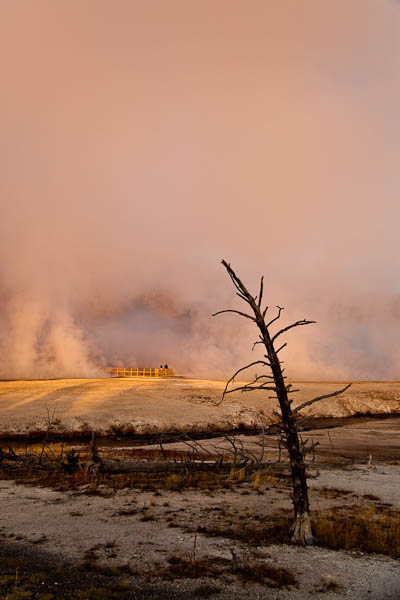
Sunrise at Black Sand Basin, Yellowstone National Park

Viewing Black Sand Basin © 2010 Bo Mackison

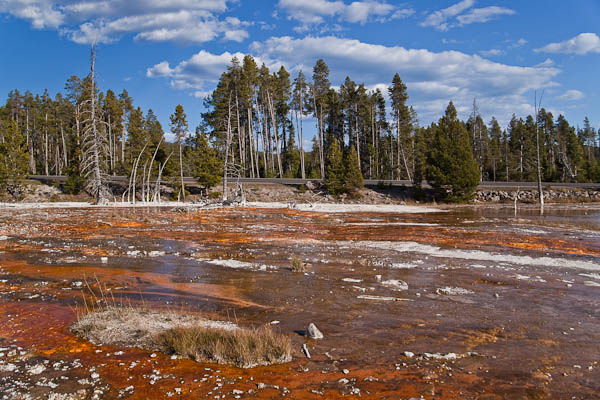
Black Sand Basin is a rather isolated group of thermal features in the Upper Geyser Basin in Yellowstone National Park. There are several jewel colored pools and geysers in the area, but I had a hard time concentrating on the specific geysers because the earliest light from the sunrise hitting the steam in 40˚F weather had turned this area, already a Wonderland, into a gigantic, purplish-yellow kaleidoscope of almost unnatural, but dazzling color.

There were only two other visitors at this time of the day, but it was one of the highlights of my three days in Yellowstone. Later, when I watched Old Faithful–the big geyser draw in the park–amongst a noisy crowd of onlookers, I kept thinking I had already seen the real show — at sunrise in Black Sand Basin.
Back to Yellowstone – Paint Pots, Geysers and Fumaroles

So here we are back at the Fountain Paint Pot Basin in Yellowstone National Park after a brief foray into the Heartland. I don’t think I have ever taken as many photographs as I did at Yellowstone, but then I’ve never seen such a densely covered wonderland of steaming fumaroles, gurgling mud pools, and shooting geysers, all surrounded by autumn’s glorious color.  After we visited Yellowstone, we went to eight more National Parks and Monuments, including Zion and the Grand Canyon, so there are many more photographs of other wonders of nature coming soon to Seeded Earth.

I figure this is a good time, anyway, to show off the beauty in the National Parks in autumn, because autumn’s color in Wisconsin is taking it on the chin with today’s weather. By nightfall, much of our autumn color will be soggy and on the ground. So, here is more from Yellowstone and beyond.

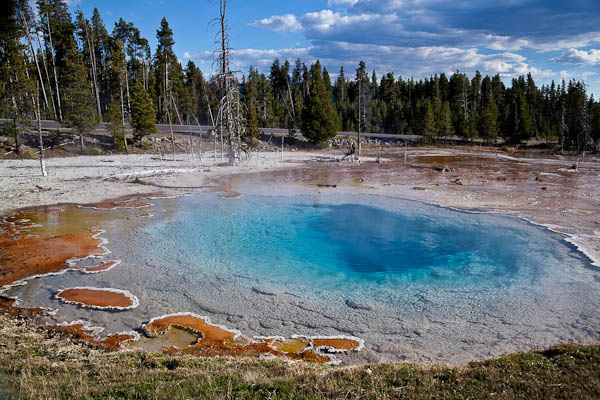
Sliex Springs on the Fountain Paint Pot Loop in Yellowstone

Silex Spring © 2010 Bo Mackison

The Fountain Paint Pot Basin features several pools, a half dozen geysers, and the largest collection of “paint pots” in Yellowstone. A boardwalk makes observing these wonders not only convenient, but also safe. There are warning signs all over the park asking visitors not to leave the marked paths. Thermal areas are unstable and more than one person has suffered serious injuries when stepping on ground that collapses into a thermal feature.

Just by looking at the pools, it is hard to accurately judge their depths. Silex Spring is about 35 feet by 40 feet on the surface. The hot springs are so clear is some places, it seems as if they are only a few feet deep — misleading. Its deepest area is over 27 feet. The name “Silex” probably refers to the silica composition of the pool, though there are park historians that claim the pool was named after a gurgling coffee pot called the Silex.

Noisy Fumaroles © 2010 Bo Mackison

When the water table is high, geysers spout quite continuously in this bacteria laden pool. When less water is available, the pool is deep brown in color from a high bacteria count, and noisy fumaroles pop along the surface. A fumarole is a geyser that does not reach the surface of the earth, so it only emits hot steam and gases above ground.

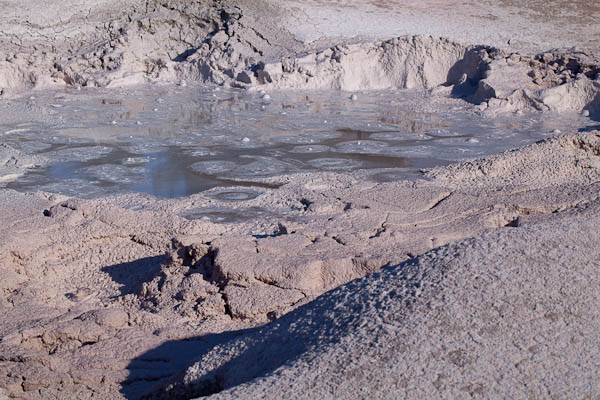
Silica and clay form popping "paint pots" in Yellowstone National Park

Fountain Paint Pots © 2010 Bo Mackison

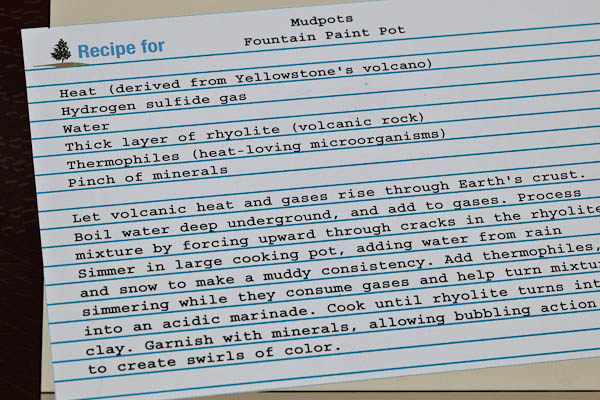
These fountain paint pots bubble on the surface. plop, plop, plop. See the recipe below which was provided on an information sign at the Paint Pots exhibit in Yellowstone.

Recipe for Mudpots © 2010 Bo Mackison

Canary Springs at Yellowstone National Park

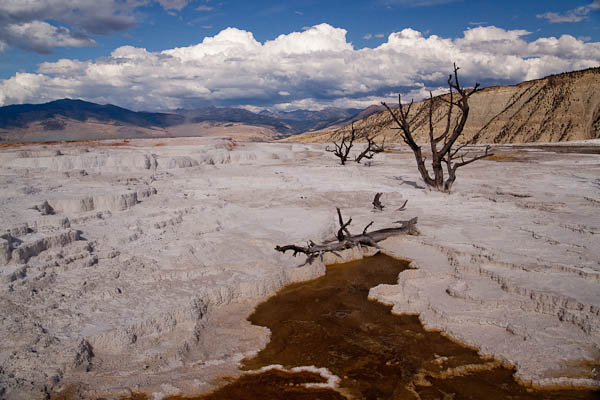
Yellowstone National Park Hot Spring Terraces in Mammoth

Mammoth Terraces © 2010 Bo Mackison

The terraces in the Mammoth area of Yellowstone National Park descend like huge stair steps. Even the site of the Mammoth Hot Springs Hotel and the other town buildings are sitting on the top of a travertine terrace, one that is several thousand years old.

Located on the Main Terrace is Canary Springs, a part of which you see in the photograph. The brownish areas of the springs have microorganisms growing in the hot water and that causes the colors, often yellow, green, or reddish brown.

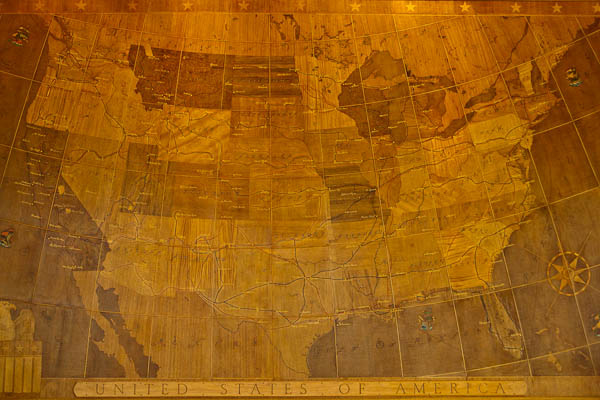
The Map at Mammoth Hot Springs Hotel

Map of Wood © 2010 by Bo Mackison

Mammoth Hot Springs Hotel in Yellowstone National Park is quite the place. It has an amazing number of things to explore. Designed by architect Robert Reamer, a veteran of park architecture, it was built in 1937, an addition to the National Hotel which had been built two decades earlier. There is a room called the Map Room because its focal point is a wall map, also created by Reamer. The map, probably 8 feet by 6 feet, is constructed, jigsaw-style, of 15 different types of wood. It’s a beautiful piece of craftsmanship, but one thing is odd about it.

When looking at the states that I am most familiar with, I noticed that my hometown is placed about 200 miles north of its actual location. Tucson, Arizona is almost due east of Phoenix. Reamer might have been a popular park architect and a talented woodworker, but his geography references were incorrect.

There were several other comments from people who were looking at the map about the odd placement of cities. Wonder just how many places are marked incorrectly?

Yellowstone in Autumn – a Gardner River Landscape

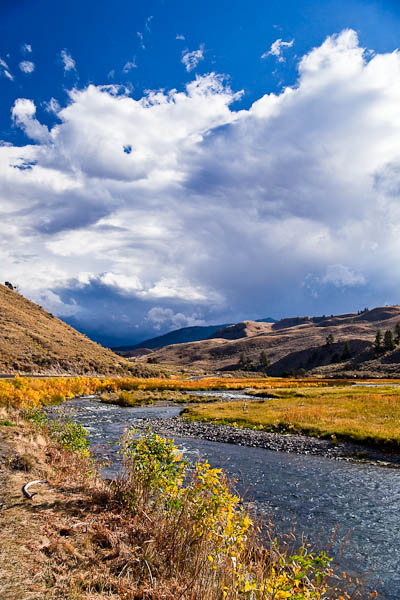
Yellowstone’s Gardner River © 2010 Bo Mackison

Even though I am safely home–and planning my next trip, a quick visit to NYC to visit family–I am still editing photos from my 16 day circle tour of a dozen of the West and Southwest National Parks and Monuments. This travelogue may last much longer than the original vacation did!

With the next sets of photographs, I’m backtracking a bit. I had left Yellowstone and wandered into Idaho for the last few posts, but I’m taking a detour back into the northwestern corner of Yellowstone National Park to present a few photos that I think are perfect for autumn viewing. Not much color in the trees–evergreens tend to stay ever green–but the colors in the grasses I found quite astonishing.

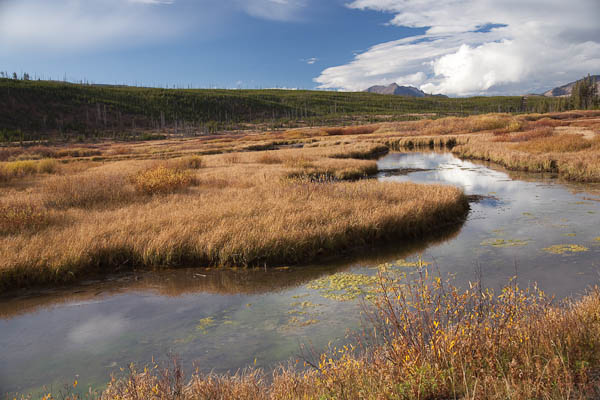
Yellowstone Meadow and Stream © 2010 Bo Mackison

I’ve never seen Yellowstone in autumn before — what a splendid time to visit. The crowds were down to just the right number of companionable people to converse with while gazing in wonder at the scenery. The temperatures were in the low 70˚s during the day and in the low 40s at night, so we were comfortable hiking all day long and snuggy warm in our little teardrop trailer at night. And the grasses had turned a brilliant combination of yellows, golds, and russets. These grasses, combined with that bluest of blue Western sky and those purple mountains — what a photographer’s delight.

These photographs were taken on our last full day in the park (October 5) when we traveled to the northern entrance of Yellowstone (Gardiner, Montana) because it was cloudy and gray and soon to rain in the geyser regions. When we mentioned to a park ranger our thoughts about the prospects of getting drenched in a storm on a geyser walk, she suggested we instead head north 30 miles to the Mammoth area as “they had clear skies last time I checked, about a half hour ago.”

We did go to Mammoth. The skies were not exactly clear, but they were full of gigantic, moody clouds with plenty of blue skies to balance things out. After exploring the Mammoth Hot Springs Hotel, Fort Yellowstone (Yellowstone National Park was run by the army in the early 1900s), and the Mammoth Hot Springs Terraces, we took a leisurely drive from Mammoth back to the Madison area where we were camping. Much of the road ran alongside this river which in turn ran through meadows, rocky terraces, and around more than a few mountains.

If you look closely, you might notice the stands of evergreens in the background. They are filling in nicely with lodgepole pines, maybe 8-12 feet high, but you can still see many of the trees burned in the 1988 fire.