Yellow Lady’s Slipper

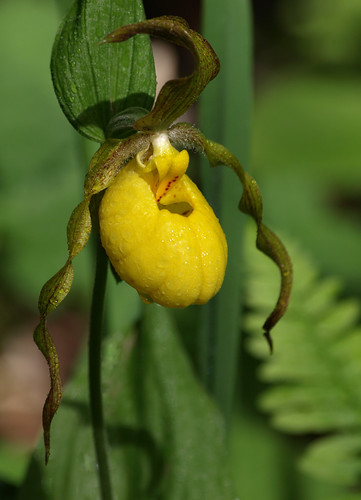
Yellow Lady's Slipper

Yellow Lady’s Slipper © 2013 Bo Mackison

This June the Yellow Lady’s Slippers were profusely decorating the woodlands of Door County. Considering how picky and complicated their life cycle is, it’s almost amazing they grow at all.

All Lady’s Slippers grow in acidic soil which must have a certain underground fungus. The seeds of these plants are about the size of a dust speck and have absolutely no nutrients. Their “fungus buddy” attacks and eats the outer coating of the tiny seeds and allow the inner cells to absorb nutrients from the fungus and then germinate. This process can take several years. After the slipper finally germinates, it can take up to 15 years for the plant to mature enough to flower.

And it doesn’t get any easier after it flowers. Its pollination is equally complicated, requiring a bee to enter the pouchy flower. Once inside, the bee will often get trapped and either dies or has to chew its way out. The bees that manage to escape this demanding mistress then carry pollen to other blossoms, but even after all this trouble, only a small percentage are actually pollinated.

Guessing the only reason these ladies survive is due to their long lives – each plant can live for 100 years, providing they are not lunch for one of the many Door County deer. Once a flower actually is pollinated it is very prolific though, and can produce more than 60,000 seeds.
Thorny Issue

Thorny Issue

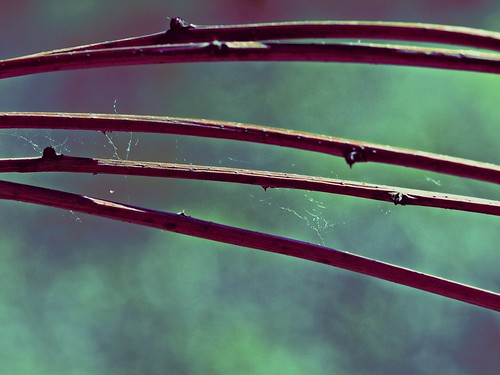
Thorny Issue © 2008 Bo Mackison

Thorny issues?
Thick thorned branches cut off my path.
Cobwebs patched between the barrier.

But deep in the woods,
the colors were brushed with swirling
purples, mauves, and cool blue-greens.

Reminiscent of a satin quilt
I slept under as a young child.
A bit of sun in an opening in the tree canopy.

Quiet, though.
The birds were silent.
The breezes were holding silent.

I held my breath, silent also.

Columbines in the Garden

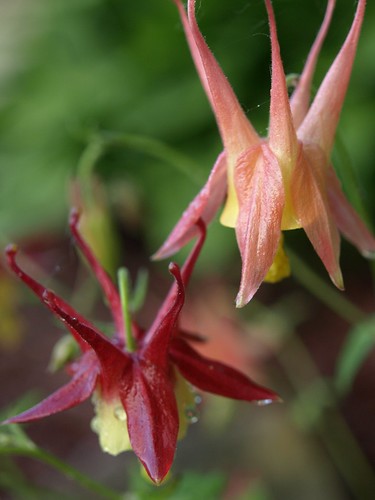
Red Columbine

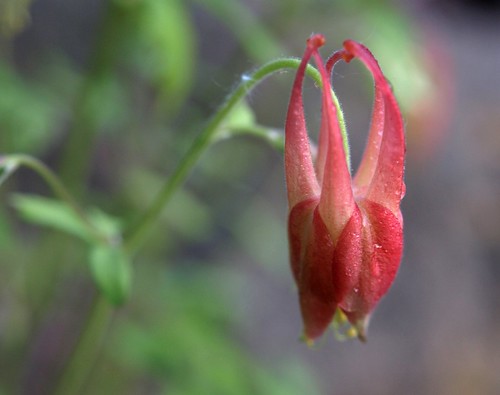
Red Columbine ©2008 Bo Mackison

I have collected seed from these columbine plants and grown them every year since I have had a home of my own. The original plants were cultivated by my grandfather in Illinois. I gathered seeds from his plants beginning in 1979 and have grown them in several gardens in Milwaukee and Madison.

Wild Columbine

Wild Columbine © 2008 Bo Mackison

They bloom from late May through early July and are a favorite with long-tongued bees and the hummingbirds.

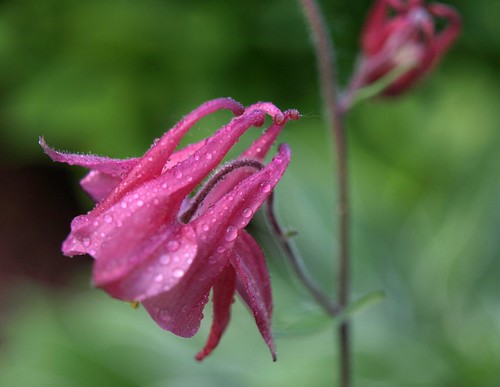
Red Columbine

Columbine © 2008 Bo Mackison

Even the bumblebees get in the act to get the nectar, though they cheat. Since they can’t reach the nectar because of the columbine’s long slender tubes, they bite holes in the ends of the spurs to get some of the sweet stuff. More than one way to beat Mother Nature . . .

Flowering Shrub atop Sand Dunes

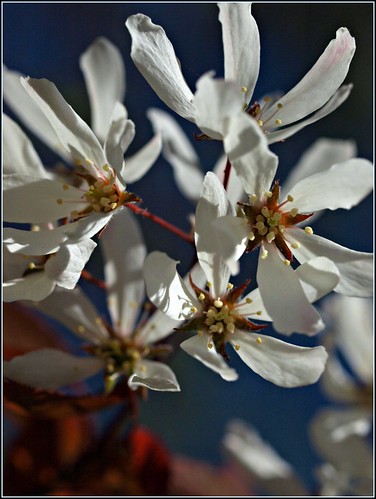
Flowering Shrub atop Sand Dune

Flowering Shrub atop Sand Dune © 2008 Bo Mackison

The sand dunes along Whitefish Bay on the northwestern shores of Lake Michigan are sporting all types of shrubbery and small trees. These white flowers provided contrast against the dark red foliage of a 10 foot tall shrub and the deep blue sky, photographed on an early June hike in Whitefish Dunes State Park on top of Old Baldy, the tallest dune in the park.

“Soprano” Vanilla Spoon

Soprano Vanilla Spoon © 2008 Bo Mackison

Osteospermum hybrid.

A fun sort of flower, this little purple blossom with spoon-like appendages.