Snapping Turtle

Snapping Turtle

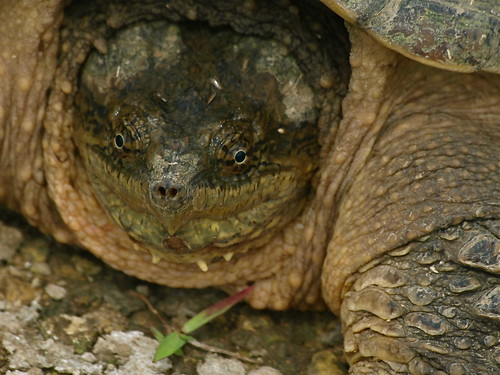
Snapper © 2008 Bo Mackison

This snapping turtle – one odd looking creature – was on dry land , traversing a muddy path moving south from the Wisconsin Riverway. She was not quite 2 feet long. It may look like I got rather close to her, but I’m not crazy – I was using a 70-300 mm telephoto lens. Even so I was about 3 feet away, and didn’t choose to get closer. She did sit quietly, staring at me wherever I went, and wasn’t disturbed as I set up my tripod to take a few photos.

Early to mid summer is a good time to see snapping turtles as it is their peak egg-laying time, and the turtles actively move from ponds and streams to nest-sites. They prefer sandy, south-facing banks and are frequently seen laying eggs along country roads. If seen in a road, they should be prodded towards the side which they are headed. Probably better not to pick one up as these turtles have strong jaws and long necks. And, after all, they are called “snapping” turtles.

Their feet are equipped with bear-like claws and their tails resemble the tails of dinosaurs. I think their faces look a bit like a mole’s face. Definitely a prehistoric-looking creature. They mostly live in the eastern two-thirds of the United States and Central America. Individuals can live at least 50 years.

Snapping turtles, as we know them, evolved about 40 million years ago, and they are the ancestors of most turtles of today. Today’s snapping turtles have hardly changed from 215 million years ago when the most primitive turtle we have evidence of lived. In comparison, the era of dinosaurs was approximately 150 million years ago and humans evolved a mere 3.5 million years ago.
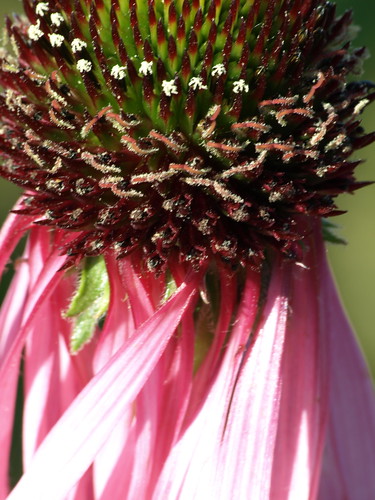
Dancing on the Prairie

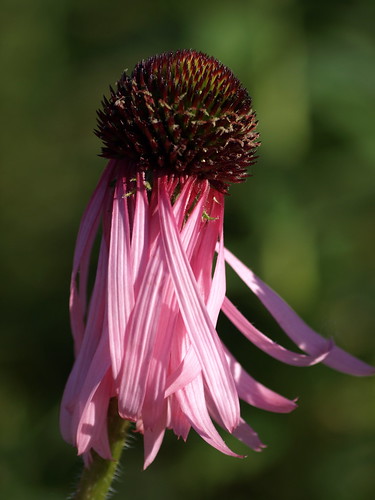
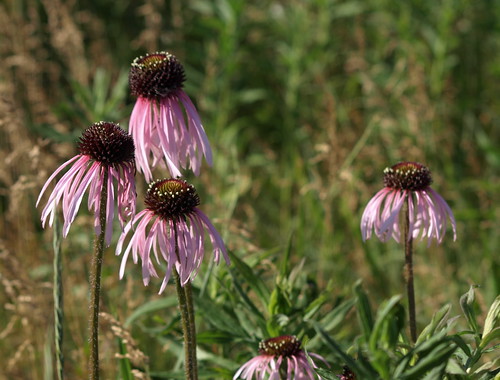
Purple Coneflowers

Purple Coneflowers © 2008 Bo Mackison

Pale Purple Coneflowers.

Bridal Flower

Bridal Flower © 2008 Bo Mackison

Like a blushing bride waiting

Dancing in the Prairie

Dancing in the Prairie © 2008 Bo Mackison

or dancer of the hula in the gentlest of breezes.

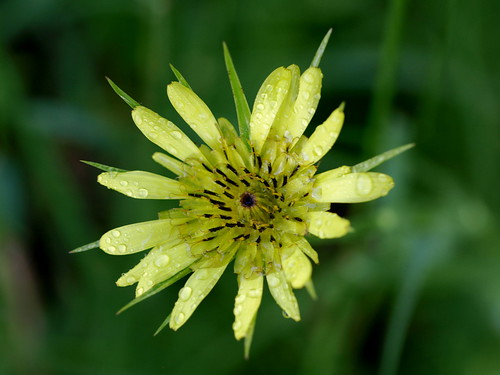
Showy Goat’s Beard

Showy Goat's Beard

Showy Goat’s Beard © 2008 Bo Mackison

This wildflower, also known as Meadow Salsify, blooms from May through August in Eastern Canada and the Northeastern and Midwestern regions of the United States. It is a flower that literally follows the sun, a true sun-worshiper. The blossoms only open on sunny mornings and as they do they turn to face the sun. They close by noon as protection against the harsher mid-day sun,but then open the next sunny day.

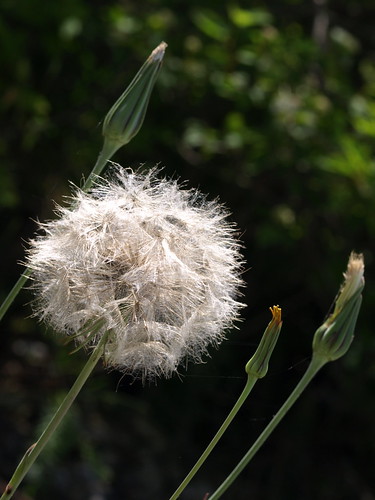
Goat's Beard Going to Seed

Goat’s Beard Going to Seed © 2008 Bo Mackison

The plant’s white, plumed seeds form a puffball that is especially fluffy, hence the name of the flower – goat’s beard. Native Americans used the sap of the plant – a thick, milky substance – as chewing gum. The tap root can be cooked like a parsnip or roasted to make a coffee-substitute. Even the leaves are edible – either raw in salads or cooked.

Devil’s Paintbrush

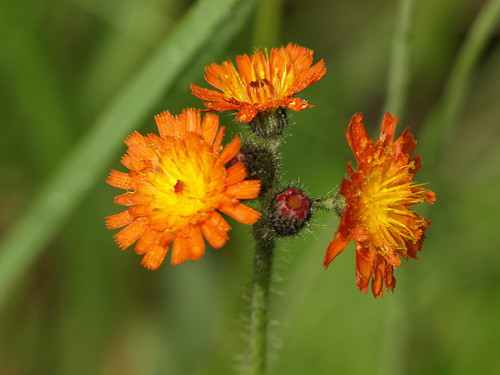
Orange Hawkweed

Orange Hawkweed © 2008 Bo Mackison

Orange Hawkweed is often referred to as Devil’s Paintbrush. It was named so by farmers, who see the weedy flower as being a troublesome beauty. It naturalized from Europe, probably in the 17th century mixed in with seed crops, and spreads quite aggressively and quickly, so it is considered ecologically invasive.

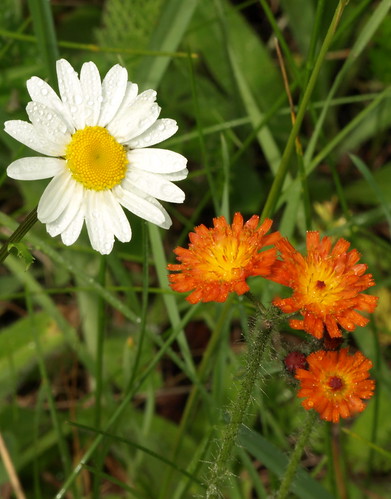
Ox Eye Daisies and Orange Hawkweed

Ox Eye Daisies and Orange Hawkweed © 2008 Bo Mackison

It’s orange color, making it stand out against the many yellow flowers found blooming at this time, adds to the open prairie’s color, but also chokes out native plants that cannot compete. The Hawkweed secretes a toxic substance that inhibits many flowers from growing very near.

Obviously the equally invasive ox-eye daisy doesn’t mind too much. How come so many of the flowers I see seem to be of the invasive sort? I have noticed over the years – I’ve been cataloguing wildflowers in Wisconsin since 1977 – that I am seeing the native flowers, but many in lesser numbers.

Orange Hawkweed Buds

Orange Hawkweed Buds © 2008 Bo Mackison

Here is the Orange Hawkweed in bud. It does make for a rather fancy weed. Its flowers are short lasting, each blossom lasting only one day.

These photos were taken along the shoreline of Green Bay in Peninsula State Park near Fish Creek, Wisconsin. The over-welcome visitors are being monitored by park rangers, and so far 3 flowers have made the removal list. (Garlic Mustard, Eurasian Honeysuckle and Phragmites)

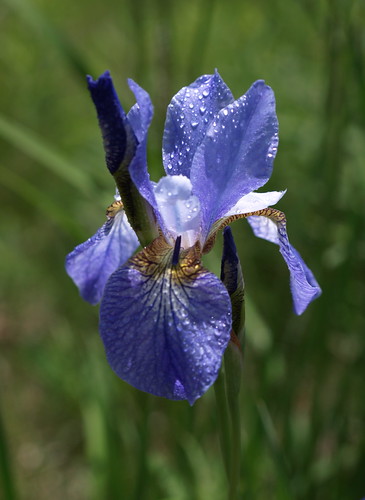
Blue Flag

Blue Flag

Blue Flag © 2013 Bo Mackison

These lovely iris are growing all wild along the roadsides in Door County. The flowers this year seem to be out-doing themselves. Maybe giving us a reward for surviving last winter’s brutal punches. I’m thankful for all the bright colors and the warmth of the sun too. I am so happy that summer has finally begun!