Sculptures for Bees?

Sculpture for Bees?

Ambien Buy Online Sculpture for Bees? © 2011 Bo Mackison

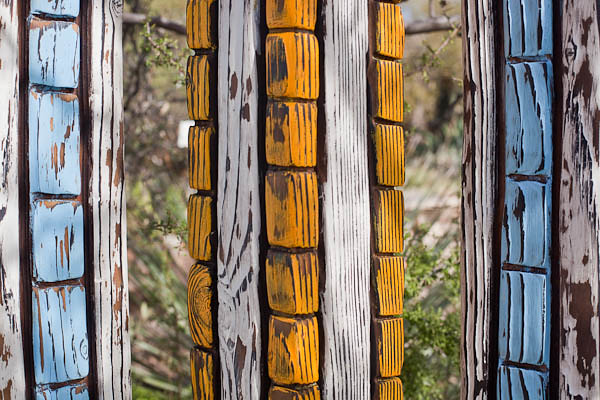
go here As I was walking through the Arizona Sonora Desert Museum last week, I noticed a new sculpture exhibit. Attractive elongated wood sculptures in varying heights decorated the bee area. There was another matching piece that was an inviting bench for a resting place.
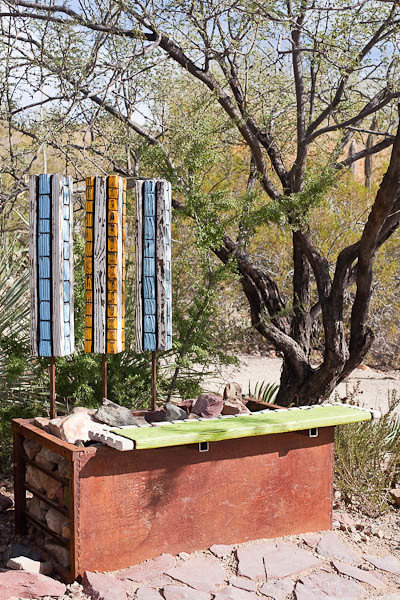
A Bench as Sculpture?

source A Bench as Sculpture and More © 2011 Bo Mackison

https://www.parolacce.org/1233521495418_f/ When I investigated further, I learned that these wooden and steel sculptures are the art work of Tucson sculptor and artist Greg Corman, and were made from recycled materials.

https://www.grupoursa.com/vacantes/asesor-inmobiliario/ This is one of the multipurpose pieces he designed for the Desert Museum. It is a bench for humans, a rock pile for lizards and a habitat for stingless, pollinating bees. (The elongated sculptures have tiny holes that aren’t visible in this photo.)

https://thesentinelgroup.com/what-is-elmiron/ The artist notes that the front of the bench is enclosed so the lizards enter and exit from the rear space, safely away from feet and other potential hazards.
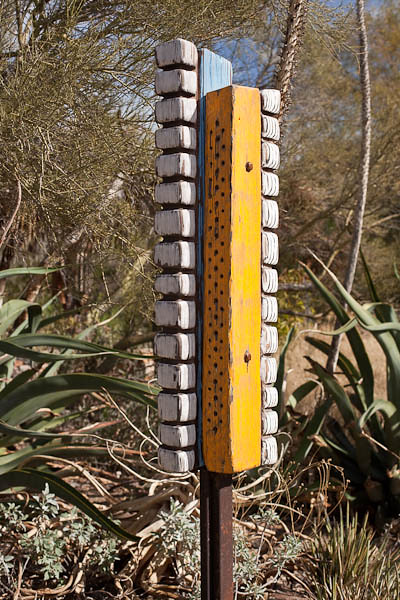
Sculpture Doubles as Bee Hive

Buy Valium Online Without Prescription Sculpture Doubles as Bee Habitat © 2011 Bo Mackison

source url In this photograph of a sculpture/habitat in the Pollinator Garden, the holes are easy to see in the yellow painted wood. The bees who use these nests are solitary bees, and are found throughout the US and in other countries.

https://thesentinelgroup.com/about-us/ They build their nests in dead wood, however this habitat is disappearing because much dead wood and limbs from gardens and parks are removed.
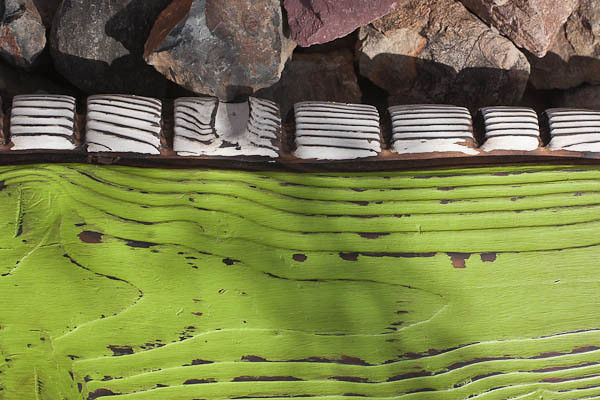
Rocks and Wood?

here Rocks and Wood? © 2011 Bo Mackison

Corman’s colorful sculptures provide natural spaces for the bees to nest while adding eye-appealing art to the garden spaces.

A wonderful concept!

Corman’s blog at  Zen-Industrial is well worth a visit. According to his site, he specializes in creating sculptures, bee habitats,  garden furnishings, and functional wood pieces. His blog features plenty of photos of his recent works.

———————–

Bo Mackison is a photographer, owner of Seeded Earth Studio LLC. Even though Bo has never met Greg Corman, she has carefully explored his bee habitat sculptures and she is smitten with his functional art!
Seeing in the Desert

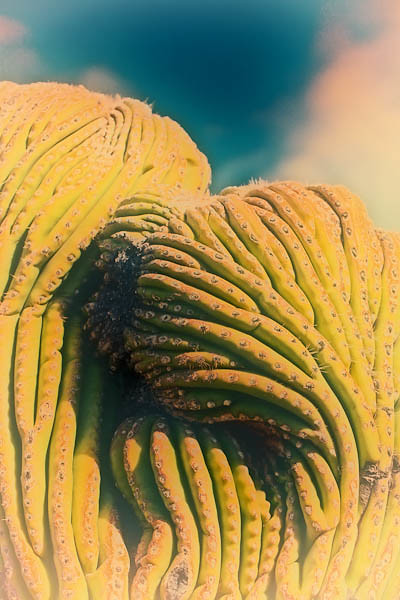
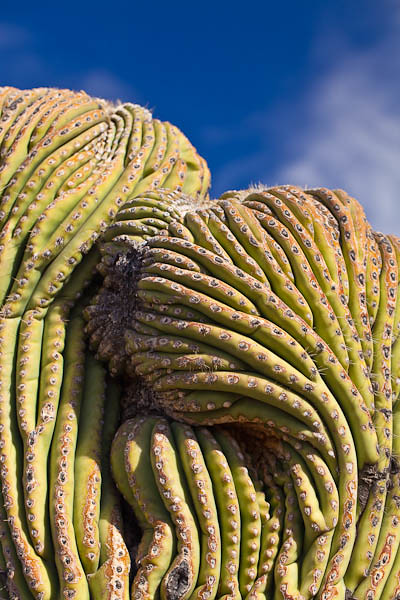
Crested Saguaro - Exposed

Crested Saguaro © 2011 Bo Mackison

Clouds come floating into my life, no longer to carry rain or usher in a storm, but to add color to my sunset sky.
~ Rabindranath Tagore

Sometimes what I see as I photograph a subject is not what anyone else might see.
Sometimes what I remember seeing is not what the pixels captured.
Sometimes I recapture the magic of what I saw using the “magic” of post-processing.

Sometimes photography is similar to appreciating that the clouds color the sunset sky.

———————–

Bo Mackison is a photographer, owner of Seeded Earth Studio LLC. She loves the Sonoran Desert, and she loves what she sees in the desert, too.

Crested Saguaro

Crested Saguaro - In Hiding

Crested Saguaro – In Hiding © 2011 Bo Mackison

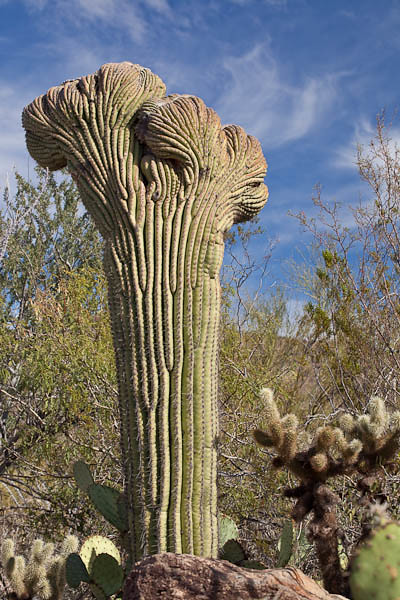
I love the saguaro cacti that are often seen in the Sonoran Desert. I love the crested saguaro even more. I’ve seen five different crested saguaro since I’ve been exploring the desert, and each one seemed to have its own character. This crested saguaro seems to be “hiding its face”, a very shy saguaro, for sure!

Crested Saguaro

Crested Saguaro © 2011 Bo Mackison

Saguaros occasionally produce a fan-like formation at its tip called a crest. These crested saguaros are somewhat rare, estimated to develop only once every 100,000 saguaros.

Biologists disagree about the cause of the cresting — some hypothesize that it is a genetic mutation, while others think it might be the result of a lightning strike, freeze damage, or a virus. At this point, the cause of this rare, crested form is still a scientist’s guess.

I don;t care, what the cause, as long as it isn’t harmful to the saguaros, and all the crested ones I have seen looked healthy — and tall, too.

Next, I’ll see how a close up of a crested saguaro responds to some abstract techniques. Coming soon…

——————

Bo Mackison is a photographer and owner of Seeded Earth Studio LLC. She is still wandering, bringing you photographs and natural history notes from the Sonoran Desert

Senita – A Hairy Cactus

Whiskery Cactus?

Whiskery Cactus? © 2011 Bo Mackison

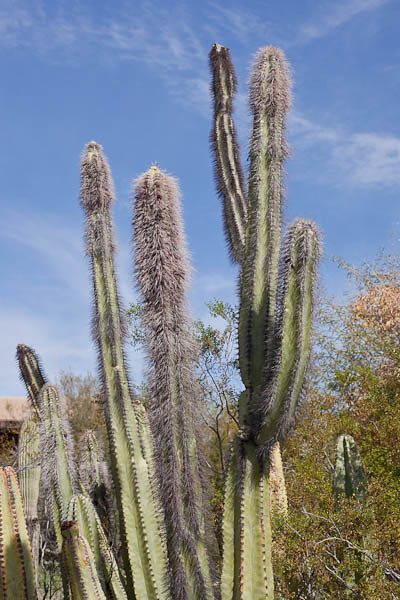
This is the Senita cactus, one of the three largest cactus species found in a few areas of the United States. The Organ Pipe Cactus and the Saguaro Cactus (third photo in linked post) are the other two specimens that are found in the southern Sonora Desert in the US. They are more abundant in Mexico.

Senita

Senita © 2011 Bo Mackison

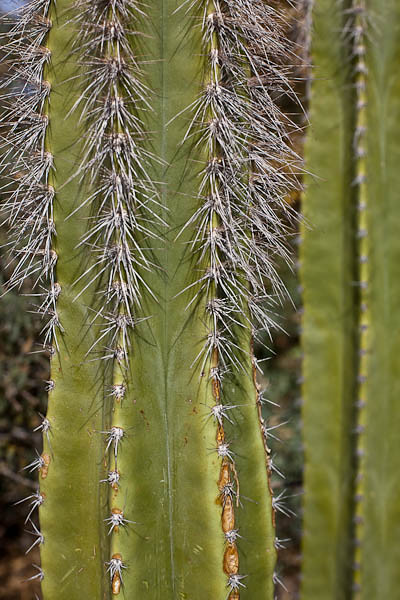
Senita usually grow about 10 to 12 feet tall and it looks very similar to the Organ Pipe Cactus, except for the long and bristly gray spines which densely cover the top third or so of each mature cactus arm.

The word senita is derived from a Spanish root meaning “old” and could roughly be translated “little old woman,” which I suppose seems appropriately named.

One of the things I found most interesting when I was doing a little research on the senita — the senita is very long-lived. According to A Natural History of the Sonoran Desert, published by the Arizona – Sonora Desert Museum, “when sites in Baja California photographed in 1905 were revisited in the 1990s, nearly every senita was still present.” The book didn’t say, but I’d love to know how much these cacti grew in that nearly 100 year period.

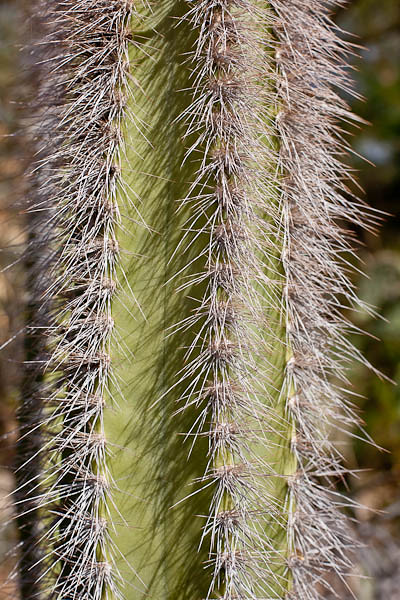
Hairy Senita

Hairy Senita © 2011 Bo Mackison

I am more than careful when it comes to touching the plants in the desert. This is extremely hard for me to stop, because I learn best through the techniques of visual and tactile (or kinesthetic) learning.

I want to get as close as I can to see the tiniest visual detail AND I want to touch all the parts of the cactus, too. Not so wise, but I did touch the gray spines of the senita — very carefully, I assure you — and they were very bristly and sharp.

Not unlike Sherpa’s two-day growth of beard when he is roughing it and forgoing shaving. (Ouch!)

—————

Bo Mackison is a photographer and owner of Seeded Earth Studio LLC. Bringing you photographs and natural history notes from the Sonoran Desert, at least for a few more days.

Spanish Bayonet

Spanish Bayonet Agave

Spanish Bayonet  © 2011 Bo Mackison

We need a renaissance of wonder. We need to renew, in our hearts and in our souls, the deathless dream, the eternal poetry, the perennial sense that life is miracle and magic. ~ E. Merrill Root

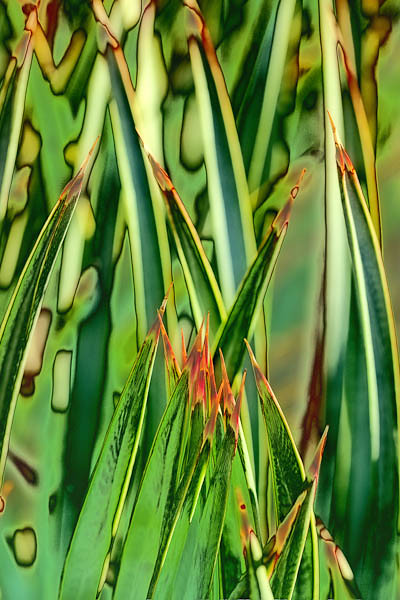
There is much in the desert that prompts a sense of wonder. These agave leaves — long, narrow, remarkably rigid, and  with dangerously sharp tips — are capped in a bright red, and make me think immediately that this plant has repeatedly engaged in  battles with inquisitive fingers.

It’s not the least bit difficult to understand why one of this agave’s English names is “Spanish Bayonet.” Perhaps requiring more imagination that I possess, I do not know why anyone would call this same plant “Our Lord’s Candle,” but my reference book, The Natural History of the Sonoran Desert, says it is so.

I did some manipulation of the original photograph so the cluster of tips in the center of the plant remain visible, but the background leaves seem to be melting into abstraction. Maybe it is like a candle! Or maybe my imagination got the best of me!

——————–

Bo Mackison is a photographer, owner of Seeded Earth Studio LLC. Loving the desert and its amazing plant life. Must remember everything in the desert, however, is sharp — no unplanned movements.