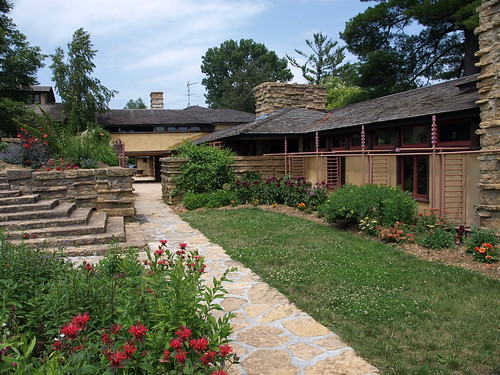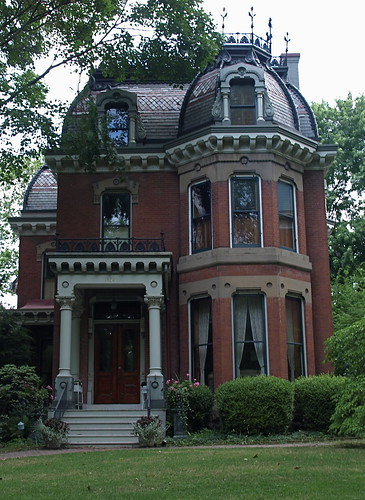
This house in part of a several block stretch of turn-of-the-20th Century homes built on Maine Street in Quincy Illinois. Each home is more fascinating than the last. I love the wrought iron detailing on the roof – can’t you just imagine a stately row of early spring tulips in bloom?
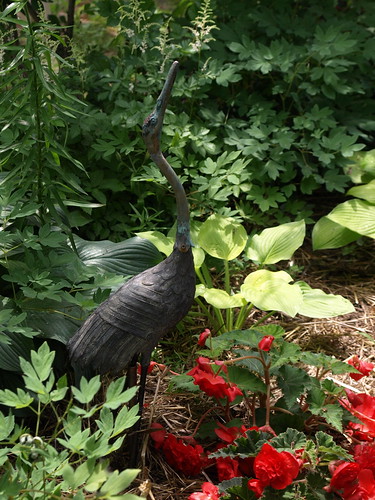
Taliesin Gardens and Asian Sculptures
Taliesin, Frank Lloyd Wright’s Home and Studio in Spring Green, Wisconsin, has several gardens also designed by Wright. (If you know much about FLW, perhaps you know that Wright designed everything connected with his homes. He was not only the architect, he also designed the furniture, rugs, and everyday house implements from dishes to lamps. And some of his clients even allowed him to design their clothing, including magnificent dresses, so that they would FIT into his vision of his perfect environment. (Susan Dana from Springfield IL was his favorite client because she agreed to any of his ideas AND funded them promptly!) Hmm. Maybe Frank was a bit of a control freak in addition to all his creativity and genius.
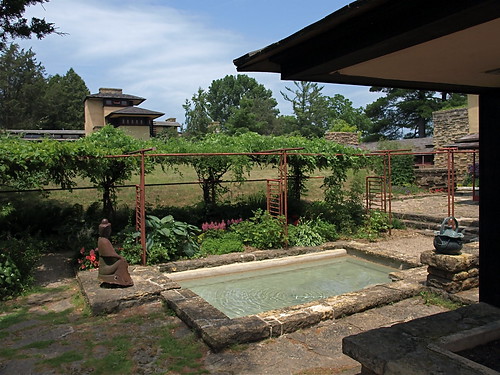
Anyway, Wright brought thousands of art objects and artifacts from Asia to the US, most notably from Japan, and used them throughout many of his homes, in his designs and in his gardens. These two cranes are in the garden near his bedroom in Taliesin. He could open his bedroom door which was set into a wall of framed windows, take a dip in his 8 foot deep plunge pool, and then wander a bit through his flowers and sculptures.
It really would have been an insomniac’s solution – a dip in a cool pool and then a midnight stroll in the gardens. I’d much prefer that option to the one I take nearly every night when I find myself awake, lying awake and watching the ceiling.
Do you think FLW would mind a new occupant?
Trio of Taliesin – A Third Post on Frank Lloyd Wright’s Home
“Like any architect, Frank Lloyd Wright wanted to make his own house an epitome of everything he stood for emotionally, spiritually, technically. And so on the family property in Spring Green, Wisconsin on the brow of a hill he built this great, long, rambling, beautiful, hugging the ground house which he called Taliesin and it was going to be his statement to the world.
It was an immaculate invention that he pretended was close to nature and was a farm and of course it wasn’t a farm at all, it was an estate. It was a rich man’s estate. And he didn’t have any money but he made himself a rich man’s estate. And he kept losing it, mortgages unpaid, bank would take it, he’d get it back, he’d incorporate himself and found a new method of outwitting everybody around him and he hung on to that to his dying day.” —Brendan Gill, Writer
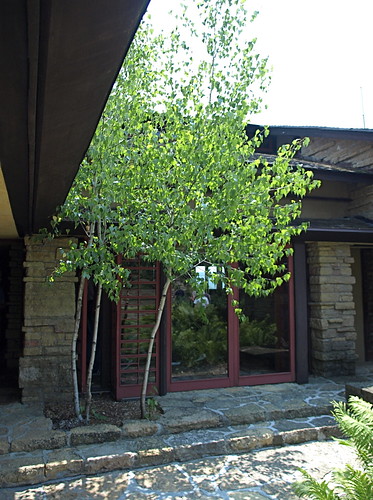
This is the main entrance to Taliesin, the author’s residence. Opening into a vary small vestibule, the ceiling is low and immediately “pushes” you into the main part of the home. Intentionally, Wright did not want his visitors to linger at the front door, but to move through the expansive spaces of delight he had created.
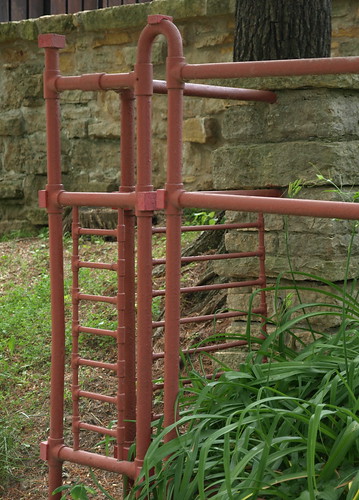
He was the ultimate “recycler”, even in the 1910s and 1920s, as evidenced by his use of barn stanchions to provide color, lines, and spaces in the interior garden.
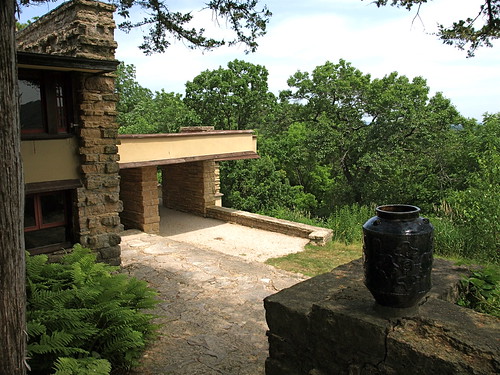
This is the terrace leading the the main entrances of his studio, partially pictured in the photo, and his personal residence. An antique Asian jar rests in a place of prominence. Asian Art is placed throughout Taliesin, exterior and interior. One of FLM’s loves and inspirations was Asian Art, which he purchased with abandon, even when he hadn’t money for the necessities of life. For some insight into Wright’s passion, here is an interesting peek into his relationship with this style of art.
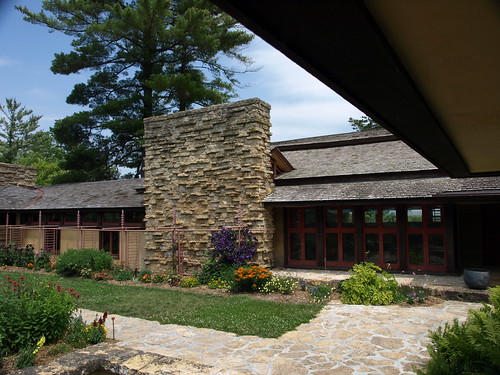
Taken from the interior garden, Frank Lloyd Wright’s studio is immediately centered – the expanse of windows where he had his studio and architectural work tables, and the massive fireplace which was used for heat, some cooking, and as a central gathering place. To the left are the string of once-barns, now re-modeled apartments for the architectural students who currently study at the School there.
More Taliesin – Frank Lloyd Wright
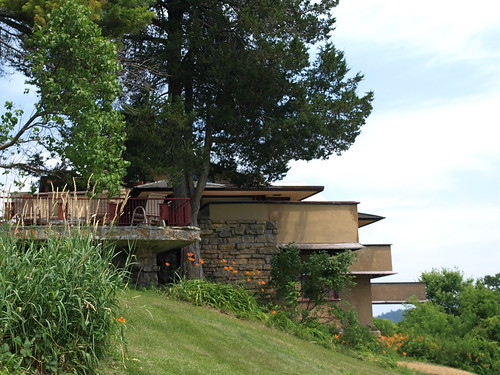
South view of Taliesin overlooking the man-made Lake Wright designed for the entrance to his home. The far area is Wright’s wife’s bedroom, the closer window to the left is Wright’s bedroom addition, later expanded to include a study when he was approaching his nineties. FLW was an insomniac, and frequently worked or roamed the night. He didn’t make for a peaceful bed partner according to his wife who wanted her 8-10 hours of uninterrupted sleep every night.
This 8 foot deep plunge pool was immediately outside FLW’s bedroom, and reportedly he would jump in to refresh himself, often in the middle of the night. It is no longer that depth, now only about 3 feet.
View of the home from the south lawn. The extension to the right is the “bird-walk” Frank built at his wife’s request. At the time of its construction the area was lined with tall hardwoods, and the extension led high into tree branches.
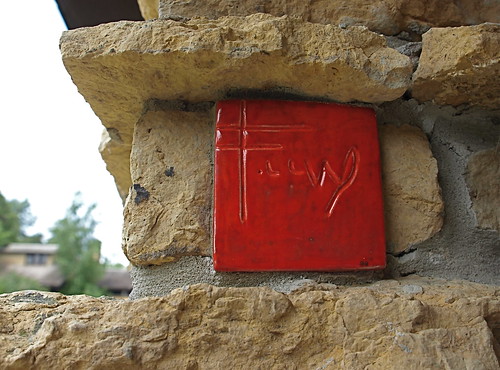
This signature tile is at the entrance to Frank Lloyd wright’s studio and home. FLW would present his famous mark, a red ceramic tile with his signature, to many of the designated buildings that met his requirements and approval – a visible sign he accepted the structure as “truly- totally-Wright”.
Taliesin – Frank Lloyd Wright’s Home
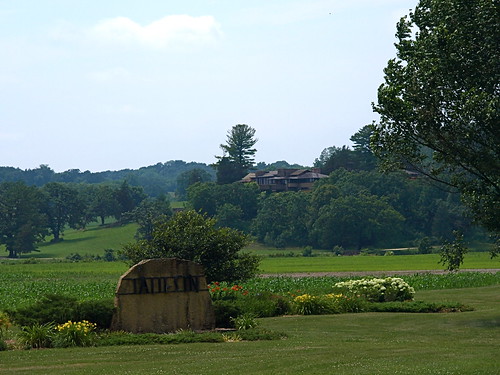
View of Taliesin in the distance and the surrounding countryside.
Jump on this bright red bus, Frank Lloyd Wright’s favorite color, BTW, and it takes you to Taliesin, Wright’s home in Spring Green, Wisconsin. This hillside was Wright’s favorite spot as a child when he lived and worked on his uncles’ farms – he would come here to hide and escape his chores. When he was an adult, his mother bought the property as a bribe to get her son to return to Wisconsin from a long stay in Europe. The bribe worked and FLW returned and built his home there.
These are the interior gardens; the main house in behind the camera. The long row structure to the right was originally a long string of barns for the family’s animals. They are now apartments for the architectural students studying Prairie Architecture at the school housed nearby.
Wright designed his buildings so that there was not a direct route to the entrance. He wanted you to “have an adventure” before you even stepped into the interior. In the case of Taliesin, one has to go through the garden, around the string of student apartments, and then past his studio, to find the front door. The windows to the left are in the main room of the house, one of the first “great rooms” – a combined living room, dining room, study.
A view of the garden. Wright bought innumerable Asian artifacts to Taliesin, and decorated the interior and exterior with these treasures. No photos of the interior were allowed, though the home tour was in depth and included all of Wright’s living areas and studio. Filled with wonderful Wright designed furnishings, Oriental rugs and Asian art.
Spring Green is about 30 miles west of Madison and Taliesin is truly a national treasure, worth the visit if anywhere in the area.