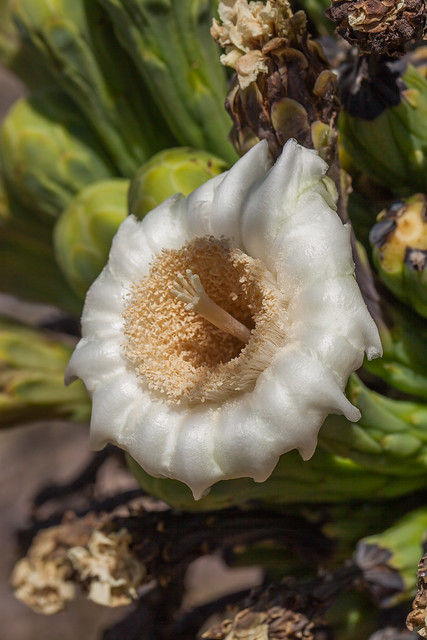
Saguaro Flower – Like A Wax Specimen ©2014 Bo Mackison
A saguaro forest is awe-inspiring any time of the year.
But it is even more spectacular during May and June when many saguaros are topped with highly decorative, three-inch wide yellow-centered, white blossoms.

Four Saguaro Flowers ©2014 Bo Mackison
The flowers open at night.
They are highly fragrant, like overripe fruit, and attract the lesser long-nosed bat, a nocturnal creature and its most prolific pollinator. Flowers stay in full bloom throughout the next morning, then they quickly shrivel into a crispy brown shell.
Many saguaro, especially the older ones, have hundreds of flowers. Only a few flowers bloom in a single day, yet the saguaro flowering season lasts eight to ten weeks.
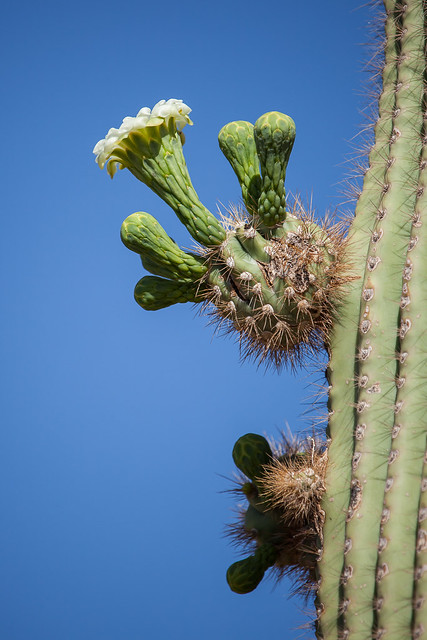
Saguaro Blossom like a Trumpet ©2014 Bo Mackison
Bats are ideal pollinators.
Since the flowers are positioned high in the air, they are easily accessible to the swooping bats plus the blossoms are extremely durable – they look like they are dipped in wax! – and are able to withstand the bat’s weight.
The flowers produce some nectar after sunrise, and so also attract bees and doves during the day, but to a lesser degree.

Macro Saguaro ©2014 Bo Mackison
A few flowers bloom at eye level, especially on cacti whose arms are drooping towards the ground.
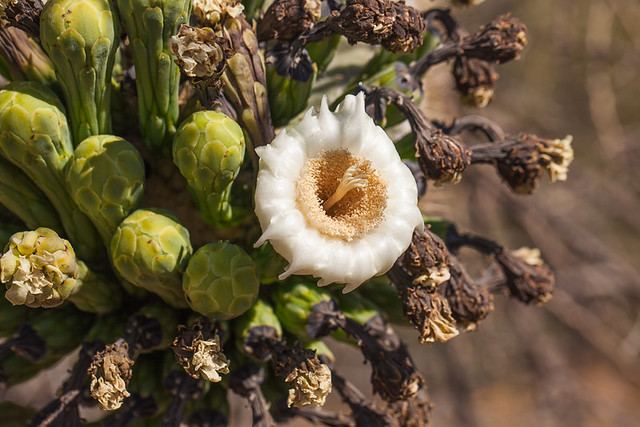
Life Cycle of Saguaro Blossoms ©2014 Bo Mackison
The blossoms that are pollinated develop into deep red, fleshy fruits in late June.
Not only do the fruits feed the bird and animal populations of the desert, they are also a traditional food of the Tohono O’odham. These people once harvested the fruits using long poles fashioned from cactus ribs. The tradition still persists, though on a limited basis.