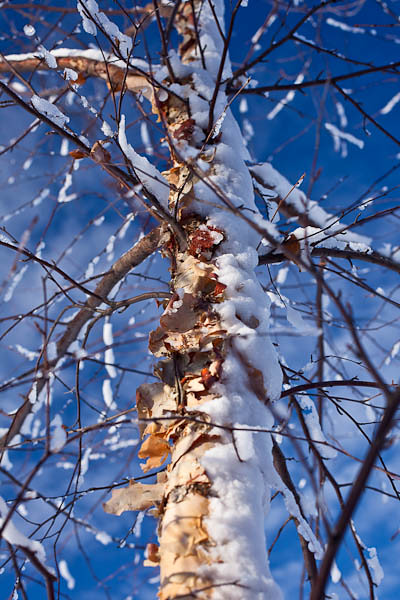
Snow Slammed

Snow Slammed Birch

Snow Slammed © 2010 Bo Mackison

I frequently tramped eight or ten miles through the deepest snow to keep an appointment with a beech-tree, or a yellow birch, or an old acquaintance among the pines. ~ Henry David Thoreau

I did tramp through the heavy snow, eighteen inches deep in the drifts, and in below zero weather, the air cold enough to turn my exposed fingers to stone, to keep my own appointment with my favorite tree in the yard, the paper birch.

Mr. Thoreau and I agree — a tree is a most delightful acquaintance.
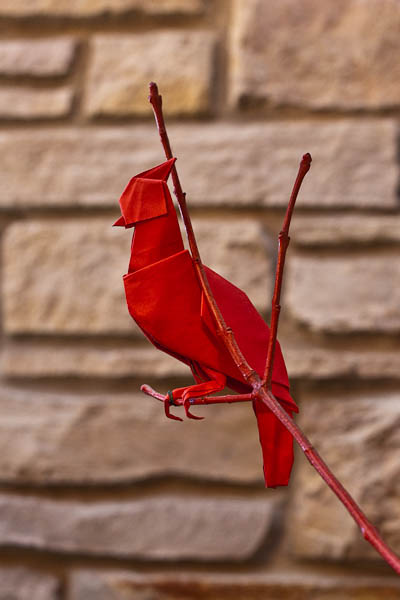
 

Origami Cardinal

Origami Cardinal © 2010 Bo Mackison

A trip to my local Botanical Gardens to see the Holiday Show. I was thrilled to see that there were origami birds tucked in dozens of branches – doves, cardinals, blue jays, even a bald eagle. This bright red cardinal is one of my favorites. Third in the series.

Norris Geyser Basin

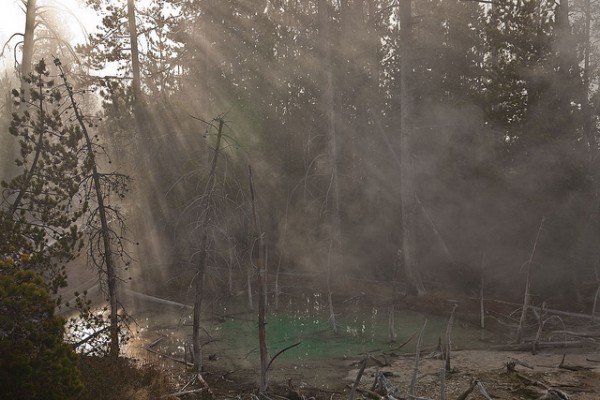
Sun Rays through Norris © 2010 bo Mackison

We explored Norris Geyser Basin on an early October morning. We arrived before sunrise. The temperatures had dropped to nearly freezing overnight, so we were alone in our explorations. Perhaps everyone else thought warm rooms and hot food were a better choice than dark and spooky geyser basins. Personally, I was quite enthralled with this magical looking land–a setting that one might expect in a few of the scarier fairy tales.

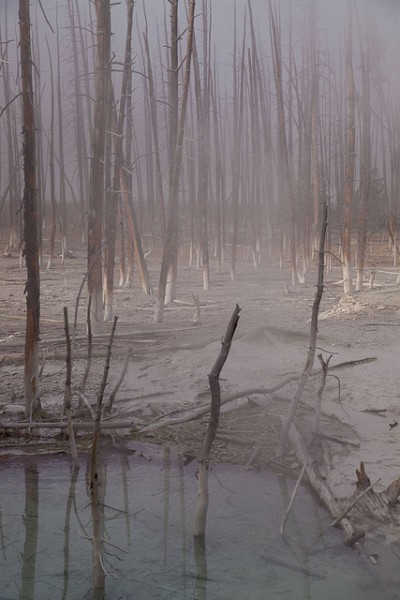
Mineralized Forest © 2010 Bo Mackison

Standing water from geyser eruptions has turned this Lodgepole Pine forest into a rather ghostly, mineralized forest, especially when seen before dawn. The near freezing temperatures made the steam from the geysers all the more visible. Since there are over 180 thermal features in Norris, this place becomes a steamy place when the temperatures drop. Even daylight doesn’t help much.

Norris Geyser Basin at Sunrise © 2010 Bo Mackison

See? Sunrise doesn’t provide much light, but it does add some interesting reflections and light to the many geyser runoffs in the basin.

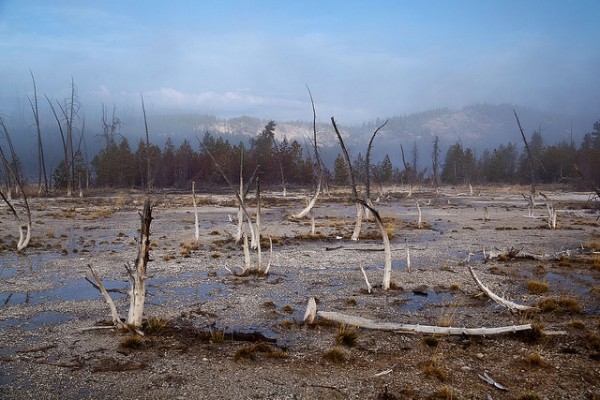
Back Basin © 2010 Bo Mackison

The Back Basin at Norris contains stands of trees that are in varying degrees of decay. It is park policy to leave the trees as they fall, unless they are an obstruction to traffic or a safety hazard. Lodgepole pines have a shallow root system, and so larger trees are easily toppled by strong winds or they absorb the minerals in the geyser runoff.

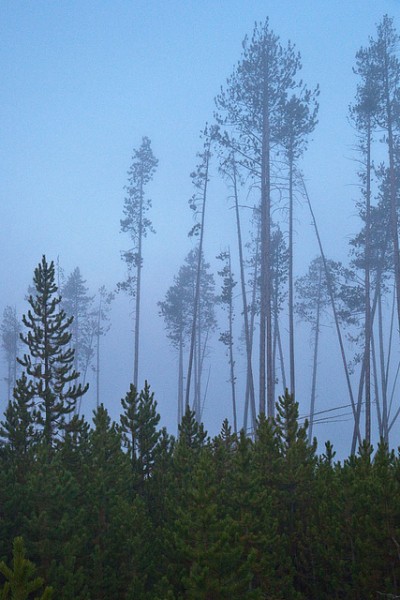
Fogged In Trees © 2010 Bo Mackison

More cold. More steam. More trees standing in cold air, but in steamy fog.

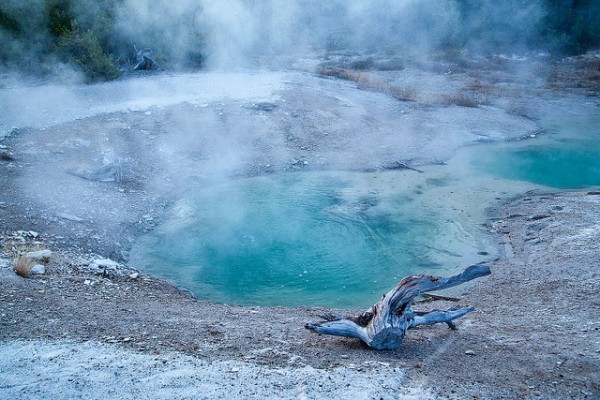
Crater Spring © 2010 Bo Mackison

Crater Spring is one of the few pools on the Back Basin loop. Norris is the most changeable and unpredictable of all of Yellowstone’s geyser basins. It is one of the hottest areas in the Yellowstone region. Geologists doing test drills have found water temperatures over 400˚ F at depths of 200 to 1000 feet. They also estimate that this geothermal area has been continuously active for over 150,000 years.

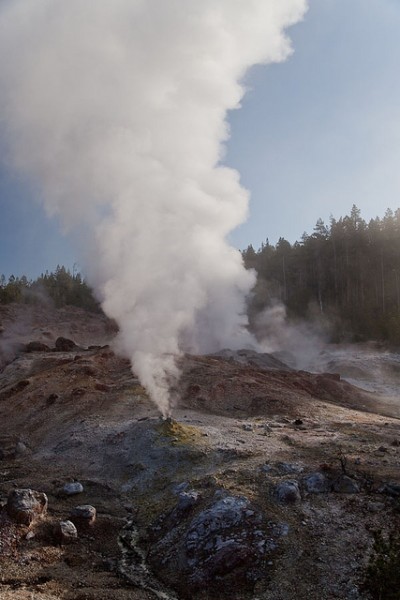
Steamboat Geyser © 2010 Bo Mackison

Back Basin is the location of Steamboat Geyser, Yellowstone National Park’s tallest, though unpredictable, geyser. Steamboat is most always steaming or spouting, but only minor eruptions of 40 to 60 feet have occurred in recent years. When the geyser was having major eruptions, water was forced upwards nearly 400 feet. Steamboat was at its peak performance in the 1960s, erupting more than 100 times in that decade. It has steadily declined since then, and there have only been a few major eruptions since 2000.

Memories of Yellowstone

Back to Yellowstone. As slowly as I am editing my photos from our trip to the western and southwestern National Parks, I may need the rest of the year to finish the job. I’m going to start posting several photos at a time, or it might take me until the end of 2011! Here are a few more thermal features from the boardwalk that extends north of Old Faithful.

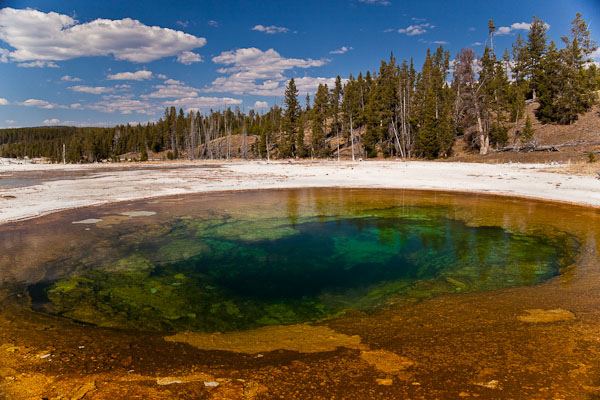
Beauty Pool © 2010 Bo Mackison

Beauty Pool shows a wide range of colors, most due to the presence of micro-organisms which thrive in extremely hot water.

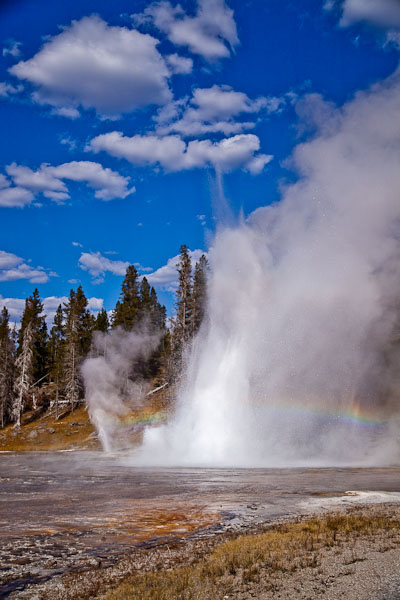
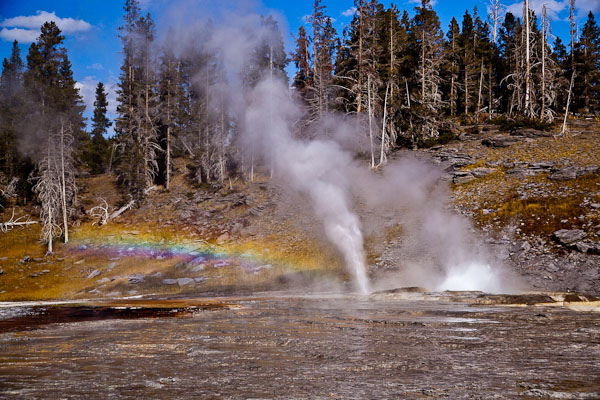
Grand Geyser and Vent Geyser © 2010 Bo Mackison

I captured a rainbow while I was photographing Grand Geyser  (right) and Vent Geyser (left). Just before Grand erupts, it emits a roaring from deep within its chambers, soon followed by a burst of water which can reach heights of 150 – 200 feet. The Vent Geyser, the little one shooting off to the left at an angle, is a companion geyser. It almost always erupts when Grand does, though it continues to shoot bursts of water and steam into the air long after Grand has quieted.

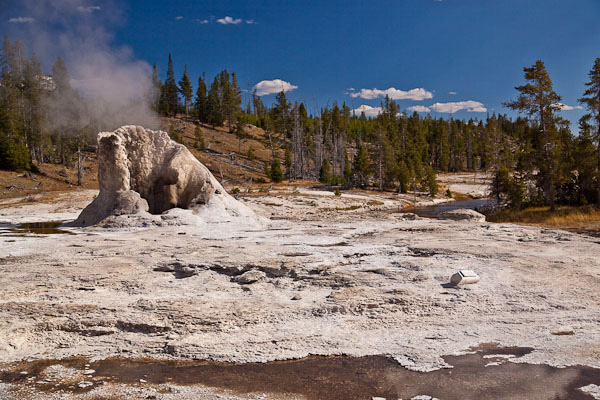
Steaming Giant Geyser © 2010 Bo Mackison

Love these geysers that make their own spurting cones. These geysers are most often the older geysers, and have been around long enough to put down layers and layers of geyserite. I never did see Giant erupt, but it was gurgling and hissing much of the time I watched.

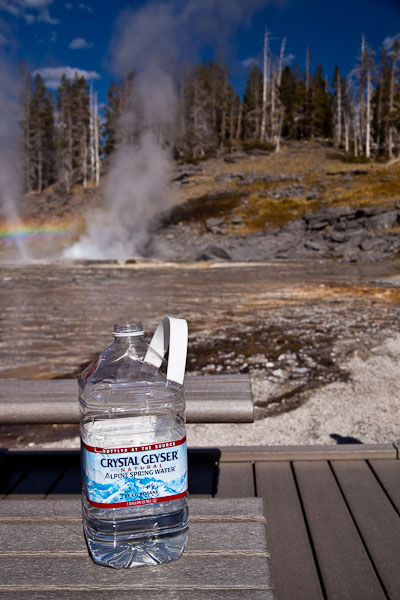
Crystal Geyser? © 2010 Bo Mackison

Might be safe to say that if you go looking for Crystal Geyser in Yellowstone, you won’t find it. I did though! I had to get a photo of the water bottle from “Crystal Geyser” in front of the hot, sulphur-y Grand Geyser. Personally, water from a geyser would be one of my last choices for quenching thirst. Just sayin’!

Riverside Geyser Rainbow © 2010 Bo Mackison

We were amazingly lucky on our geyser walk. First we saw Grand Geyser which began erupting as we were approaching it. Great timing on our part! And then another half mile down the trail and Riverside Geyser is spurting across the Firehole River. Doubly perfect timing. Riverside Geyser is one of Yellowstone’s most consistent geysers. A century ago is was spurting every eight hours or so. Now it is likely to erupt every six to seven hours. The rainbow was quite a pretty sight, a lovely bonus.

Prairie Sky at the University of Wisconsin Arboretum

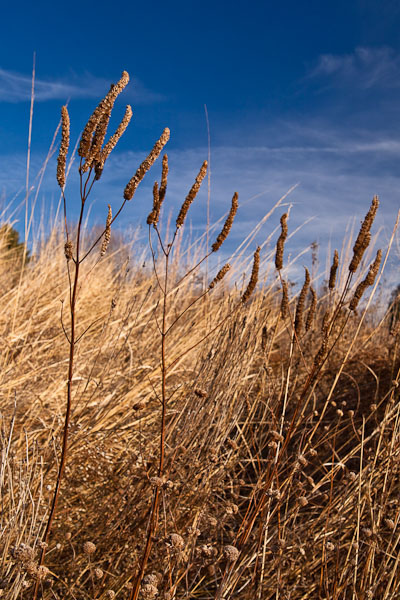
Prairie Sky © 2010 Bo Mackison

Simple times. Autumn photograph, striking browns and golds under a bright blue sky. Photographed at the University of Wisconsin Arboretum in Madison, Wisconsin.