Driving at Dawn

I had a busy Saturday planned. I had an assignment to do some travel writing at a destination about 2 hours north of my home. The festival started at 8 a.m. with a tour of a National Wildlife Refuge, then a 10 o’clock workshop on nature photography by the Refuge Artist in Residence, and an afternoon trip to a cranberry bog. Plus a chicken dinner and the unveiling of this year’s edition of Whooper Brew after the bog trip.

(Hint: I went to the Crane Fest held in Necedah, Wisconsin, and I’ll share some stories and a few photos on the cranberries, the beer, and the whooping cranes in a later post.)

I haven’t been sleeping well for some unknown reason, and so when the alarm rang at 5:30 this morning I was none too excited. I managed to drag myself out of bed after getting maybe 2 hours of sleep, and I was rather grumbly as I got in the car. It was foggy and gray, and I was relieved I didn’t have to do the driving.
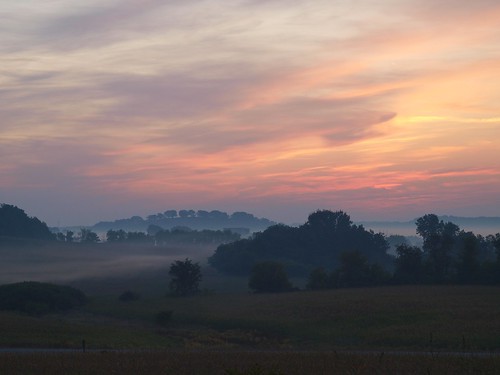
Wisconsin Countryside at Dawn

Wisconsin Countryside at Dawn © 2008

And then I blinked open my eyes as the skies lightened. Wow! I woke up pretty darn fast.
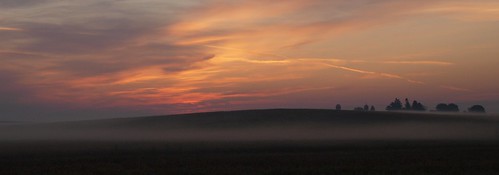
Wisconsin Farm at Dawn

Wisconsin Farm at Dawn © 2008

I fumbled around in the back seat until found my camera. Needless to say, we didn’t make it to the festival at the appointed time.
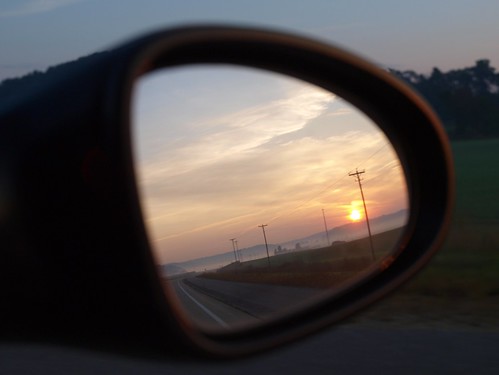
And Finally, A Rearview Mirror Sunrise

And Finally, A Rear View Mirror Sunrise © 2008

Finally, after we pulled over to the side of the road for the fifth time for just “one more photo,” the sun actually appeared, and the dawn was over – so we could get on with our drive.
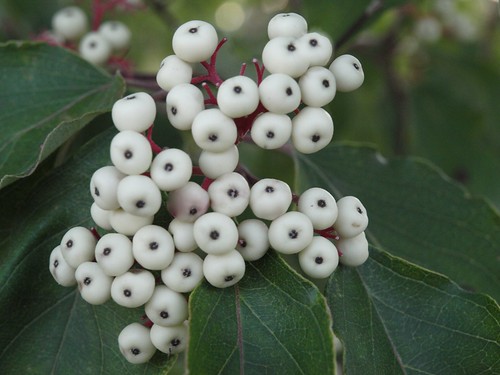
It’s the Berries

Red Dogwood Berries

Red Osier (Red Twigged Dogwood) Berries © 2008

A walk in the prairies show grasses are browning, flowers are setting seed, and this red osier shrub (red twigged dogwood) is ladened with bunches of heavy white berries. By the way, the berries do not turn red.

The dogwood’s name has nothing to do with dogs. The word is derived from an Old English wood dagge (dagger) and refers to the hardness of the wood. A European species was once used to make butchers’ skewers.

Fungi on the Forest Floor

Fungi on the Forest Floor

Fungi on the Forest Floor © 2008

These fungi are cool, but I tell you. I am terrible when it comes to trying to identify these things, and fungi are not things you want to mis-identify, so I won’t even try.

I do remember copying this information awhile ago – information about fungi in general that I found fascinating. This is what I saved from one who is more expert than I am:

“Recent DNA analysis indicates that fungi are closer related to animals than to plants. Fungi are so peculiar that they are regarded as neither plant nor animal, but rather their own thing. The divergence of animals and fungi has been estimated as taking place some 965 millions of years ago.”

If you’d like a general introduction to the world of fungi you can visit the fungus pages at www.backyardnature.net/2fungi.htm

Real Tomatoes

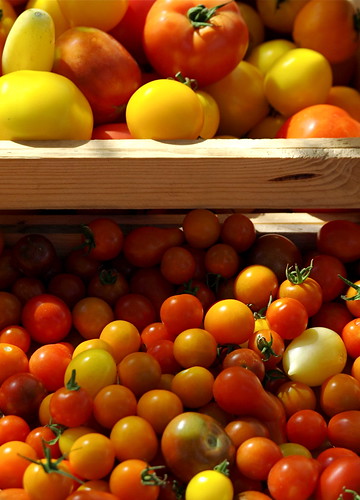
Real Tomatoes

Real Tomatoes © 2008

This is what real produce looks like – it isn’t perfectly round, without a blemish or bump. It isn’t rated on consistency and each fruit doesn’t have to look like its neighbor. It’s real food. Organic and picked at it’s peak. No traveling 1,000 miles in a refrigerated car. Simply packed in a crate and taken about 6 miles to the market. Very yummy! You really can taste the difference.

Farmers’ Market, Madison Wisconsin

Prairie Grasses in Wisconsin

Say the word “prairie” and many people visualize Laura Ingalls in her log cabin or rolling wagons crossing open prairie land, the wagons filled with settlers on their way out West in search for a better life. But I’m thinking most really have no idea of what a prairie looks like up close.

Sure, most know there are lots of sunflowers and yellow goldenrod wildflowers and some tall grass, but ever give thought to the hundreds of varieties of grasses that make up the tall grass and short grass prairie lands. Obvious, right?

Well, maybe not so obvious at all. It’s easy to overlook grasses. I mean, it’s just grass, right?  So let me show you just how different a few of these grasses really are.

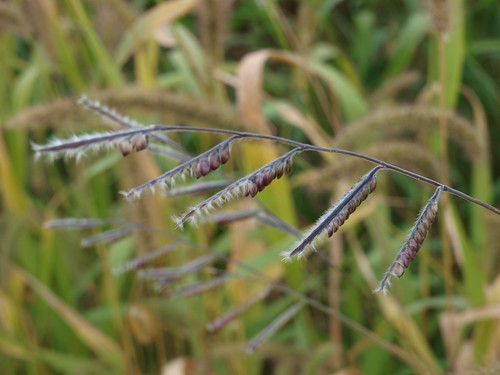
Side Oats Grama Grass

Side Oats Grama Grass © 2008

This prairie grass is found in the high prairies in southern Wisconsin and extends to central Wisconsin in fewer numbers. It’s one of my favorite grasses to look for – I love the purply-blue fruits hanging in a row like someone pinned them on a clothesline.

When buffalo roamed the region, this was their main source of food. It’s an easy grass to identify – all those oats are hanging off to one “side”. So it is side oats grama grass. Grama is from gramen, the Latin word meaning grass.  1 1/2 to 3 feet tall.

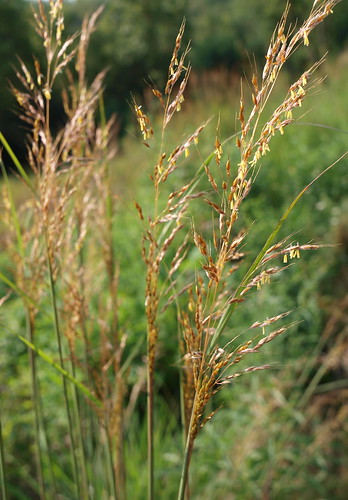
Indian Grass

Indian Grass © 2008

Before agriculture and tended crops developed, Indian grass was second only to big blue-stem grass as the most important plant in the tall grass prairie, both in its numbers and in its nutritional content.

It is extremely drought resistant because of it’s extensive deep root system – typical of the prairie plants. The frequent prairie fires do not damage these grasses – they are highly adapted to the burns. This grass was one of the taller one,  usually standing 6 to 9 feet tall.

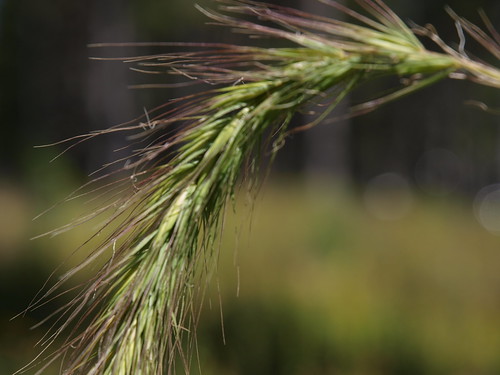
Canada Wild-Rye Grass

Canada Wild-Rye Grass © 2008

This is one of the most important grasses in the tall grass prairie. It acts as a nurse crop for prairie seedlings early in the growing season before it declines as the warm season grasses mature. Canada Wild-rye Grass grows 2 to 5 feet tall and forms a loose sod. Native Americans used the seed for food, as did a multitude of large and small animals.

The grasses had other uses besides as food.They were used as fuels, and also the fibers were woven into mats for internal walls in small cabins, window coverings, and floor coverings.