Path through a Tall Grass Prairie © 2008
A path leads through a small segment of a tall grass prairie. Oak savannas are spreading into the prairie in the background. This prairie will have a prescribed burn next year.
Fire plays an important role in managing prairies, just as it has been a natural and frequent occurrence on the grasslands for thousands of years. The prairie flowers, grasses and animals all rely on the burning, which prevents invasion by larger shrubs and trees, and removes most of the accumulation of mulch that typically smothers the growth of the small prairie plants, some nearly microbial in size.
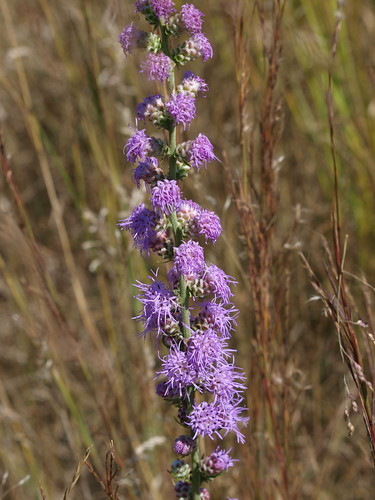
Marsh Gay-feather, A.K.A. Marsh Blazing Star © 2008
This late season prairie wildflower, Liatris spicata, blooms from the top down, instead of the more common bottom to top growing pattern. It is a favorite of many species of butterflies. It is a rather spectacular plant, ranging in height from 2 to 4 feet tall. In fall, the deep brown seed head attracts dozens of yellow finches for a dramatic show. It is more common the further east you travel, though it was once abundant in southern Wisconsin.
Native Americans and early settlers considered the plant an important commodity due to its medicinal properties as well as its nutritional use. The Lakotas ground its roots to make an appetite stimulant, and also ate the entire plant to treat heart ailments. it was said to strengthen the “bound muscle with poor rhythm.” The plants’ corms were also used the Lakotas, as well as by other tribes and early settlers, as winter food.

Big Bluestem Grasses © 2008
The big bluestem is the tallest of the grasses, waving upwards of 8 to 10 feet tall. It is also referred to as turkey-foot grass, as the grass often splits into threes near its top.
There are five very well adapted perennial grasses which predominate the tall grass prairie or grassland biome: big bluestem, little bluestem, Indian grass, switch grass, and prairie dropseed. This woven masterpiece of fibers, which thread themselves together in a protective matting, allows the prairie and its smaller plants and animals to survive threatening winds, fires, drought, and prolonged, harsh winters.
I think there is nothing lovelier than walking through a tall grass prairie at this time of year, the winds gently pushing the tall stems above my head, and searching in the yellow-brown for purple asters, sunflowers and other late wildflowers – the harbingers of autumn.

Sweet Coneflower © 2008
This is a close cousin of the black-eyed Susan, the foliage is firmer and the plant tends to grow taller, up to 4 1/2 feet in height. The name comes from the plant’s perfumery – rather a sweet anise- or vanilla-scent lingers when the leaves are crushed.