Painted Desert Inn

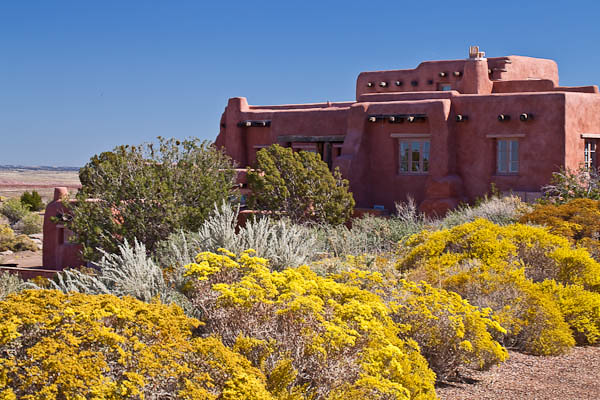
Painted Desert Inn and Autumn Blossoms

Autumn Blossoms, Painted Desert Inn © 2010 Bo Mackison

On our swing through some of the Southwestern National Parks in October, we stopped at the Petrified Forest National Park in the east central region of Arizona. This park also includes the Painted Desert and this building, the Painted Desert Inn Museum. The architectural style of the inn was influenced by Pueblo Indian dwellings and Early Spanish architecture. It was built to harmonize with its surroundings and blends well with the surrounding Painted Desert.
Garden at the Painted Desert Inn II

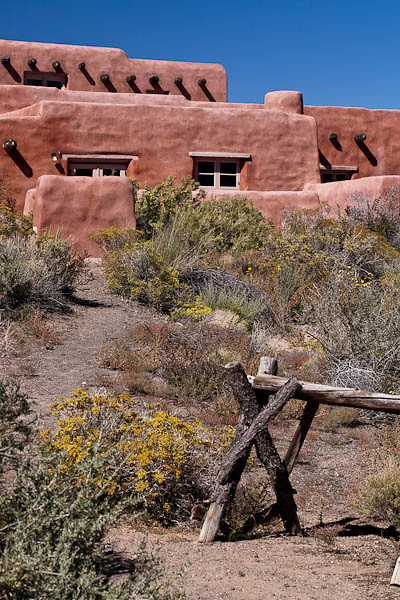
Desert Garden and Painted Desert Inn © 2010 Bo Mackison

The original inn was built in the 1920s, mostly of available stone and petrified rocks and the builders used a mud mortar to hold the structure together. It was a trading post and had a lunch counter, but it had no water or electricity. The Park Service purchased the building in 1936 and used WPA funds and Civilian Conservation Corps labor to essentially rebuild the entire structure.

In the late 1930s, National Park Service architect Lyle Bennett redesigned the building, utilizing the Pueblo Revival Style. The Painted Desert Inn re-opened for business on July 4, 1940 and was a stop on the Historic Route 66. (Petrified Forest National Park is the only national park that has a portion of the Historic Route 66 within its boundaries.) The inn’s life as an oasis in the middle of the desert lasted only a couple of years, and ended with the beginning of World War II. Traveling was greatly curtailed and the inn closed in 1942.

Not to be ignored for long, the Inn again opened and was operated from 1947 through 1963 by the Fred Harvey Company, a company who was a concessionaire in many of the Western National Parks. Then, after sitting unused for a dozen years, the building was scheduled for demolition in 1975. However a public outpouring of concern for the historic building convinced the Park Service to save the Painted Desert Inn. It opened in 1976 as a museum and bookstore on a limited basis.
Painted Desert Inn, National Historic Landmark

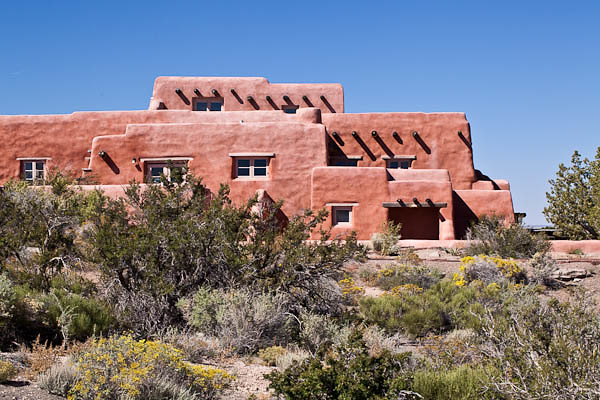
Painted Desert Inn, National Historic Landmark © 2010 Bo Mackison

It again underwent extensive repair in 2004-06 and then reopened as the museum and bookstore now pictured. The building is on the National Register of Historic Places and is also a National Historic Landmark.

The building is a stunning example of architecture, and has a history well worth exploring. There are exhibits inside the Inn which shed light on its fascinating history. A walk around the entire structure and through its many rooms reveals small architectural gems such as arched doorways and windows, hand crafted metal lamps, and an intriguing wooden beam support system in the ceilings.

In the next posts, I’ll feature the interior of the Painted Desert Inn, so lovingly and meticulously restored, and filled with art and intricate design features, and also photographs of the Painted Desert and the Petrified Forest landscapes.
An Alphabet in Four Parts – III

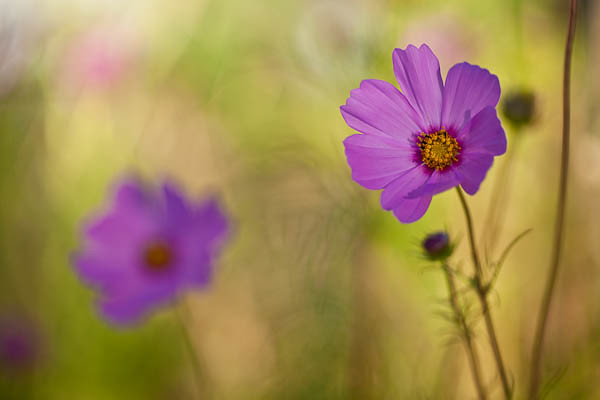
Cosmos at Sho-Low

Cosmos and Bokeh © 2010 Bo Mackison

Continuing with the third installment of my alphabet, my year-end/beginning musings:

N is for NEST.

NEST. Nest is simple and symbolic. It’s a comfort word for me. I hold it as a quiet space, away from distractions and other people. Sometimes I curl up in my nest, real or imaginary, to recharge my batteries. Doesn’t take long, and then I’m ready to go on and meet the world again.

O is for ORDINARY.

ORDINARY. When you get right down to it, there isn’t much that is ordinary. If you look closely and examine ordinariness, you often find that the ordinary is truly extra-ordinary. For example, drinking a steaming cup of tea, a simple experience, can be made extra-ordinary with intention, mindfulness, and appreciation for the good things in life.

P is for POTATO.

POTATO. The potato provided me with a powerful lesson. Yes, the potato. A basic food, everyone loves potatoes – mashed, smashed, french fried, baked, even raw and crunchy. Everyone I know eats potatoes – except for my older daughter who has taken only one bite of potato in her life. She decided that she despised the texture and taste and she swore off potatoes as a two year old. Twenty-eight years later, she continues to stand by her choice.

Here is the interesting part. Whenever a new person enters her life, and they discover that Jeanne does not eat potatoes because she  chooses not to eat them, they almost always go out of their way to trick her — to get her to unknowingly take a bite of a potato. It becomes a challenge for them.

Interesting, hmm? She tells people she doesn’t like potatoes, that she doesn’t eat them, and because that doesn’t fit squarely with other people’sapproach to food, they want to convince her to join their side. Now, we are talking about potatoes here. I’m always amazed that this happens repeatedly.  It makes me wonder.  If people react so strongly to a different eating style, just how far will they go to make people conform to their way of thinking about the important topics in life. Now there’s a potato for thought.

Q is for QUESTIONS.

QUESTIONS. I love asking questions. I love searching for answers to questions, too. And researching for answers to questions, too. To me, searching and researching are two different methods of knowledge seeking. In searching, I look for answers in my head and in past learning experiences. In researching, I look up what other people have discovered about the subject. Search and research–I think the two methods balances the quest for knowledge quite nicely.

R is for RELINQUISH.

RELINQUISH. I relinquish the story I hold dear. The story of why I am like I am, of how I can’t change because this experience or that exchange marked me for life. Bull hockey. Change isn’t easy. It’s damn hard work. But change is possible. And I am dealing in possibilities from this day forward. Tabula rasa. A clean slate. I can deal with some leftover chalk dust or a few wayward chalk smears, but I am erasing that complicated story. No more worn out explanations that stand in my way of new explorations.

S is for SURVIVOR.

SURVIVOR. I am a survivor. Survivors develop a deep strength within themselves. Sometimes I forget I have this strength. It takes a big challenge to remind me that I can draw strength from my past experiences without dredging up those experiences. A valuable lesson.

T is for TREASURE MAP.

TREASURE MAP. I made a treasure map a few days ago while thinking about leaving 2010 behind and entering 2011. I didn’t write resolutions, but I did choose a single word as my focus for the year – POSSIBILITIES. Then I drew islands on my treasure map. I filled in one island with my dreams. I filled in another island with my desires. I filled in a third with my goals for the next three months, six months, and year. I added a few favorite quotations for inspiration and motivation and a few words clipped from newspaper headlines for guidelines. Then I hung the map in my studio where I can see it everyday as I work. I love treasure maps!

The Finale — Underwear through Zest.

Here Comes the Sun – Sunrise at the Grand Canyon

A tribute to the winter solstice, with heartfelt joy that each day will now start a bit sooner, last a bit longer.

Sunrise at the Grand Canyon:

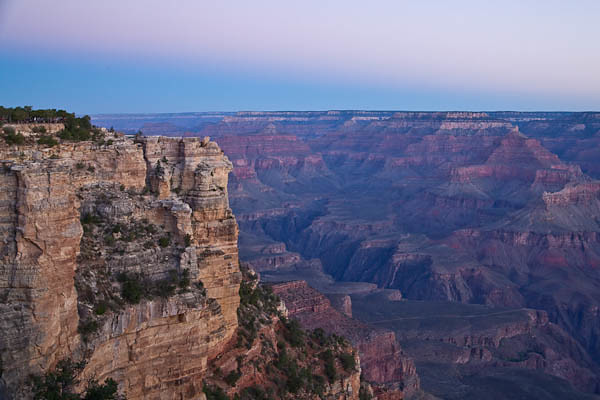
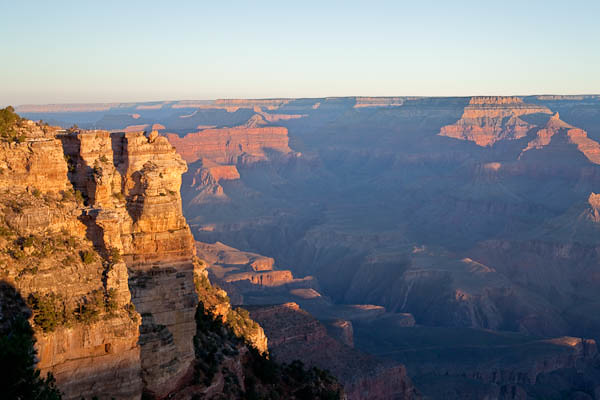
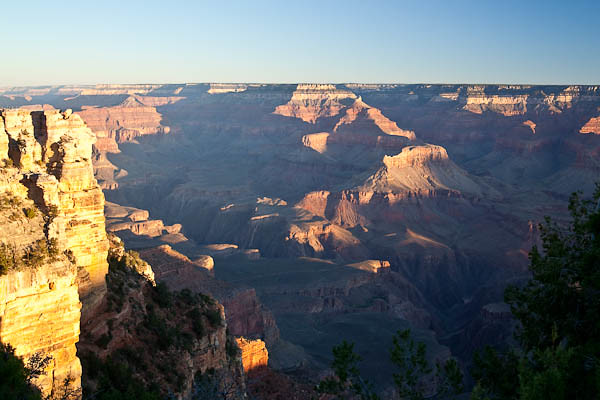
Grand Canyon Sunrise 7:55 AM

Grand Canyon Sunrise 7:55 AM © 2010 Bo Mackison

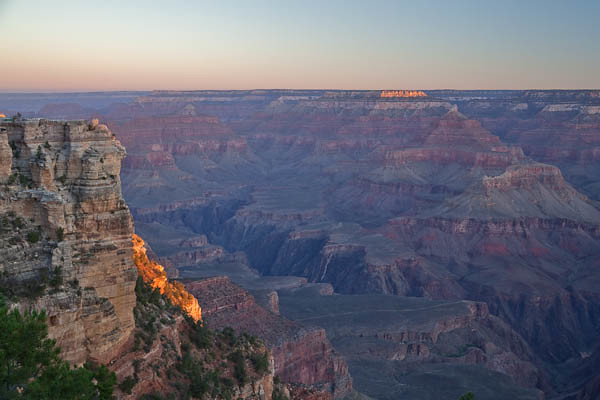
Grand Canyon Sunrise 8:05 AM

Grand Canyon Sunrise 8:05 AM © 2010 Bo Mackison

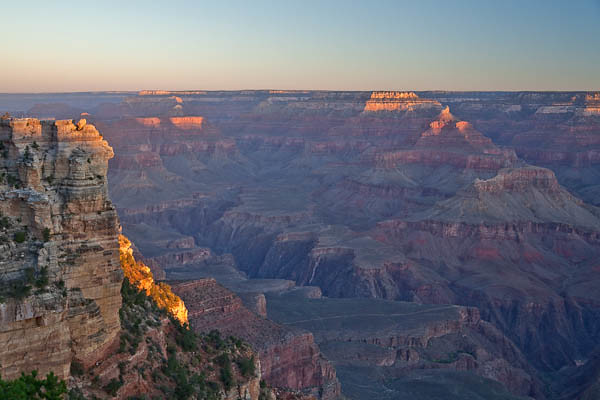
Grand Canyon Sunrise 8:19 AM

Grand Canyon Sunrise 8:19 AM © 2010 Bo Mackison

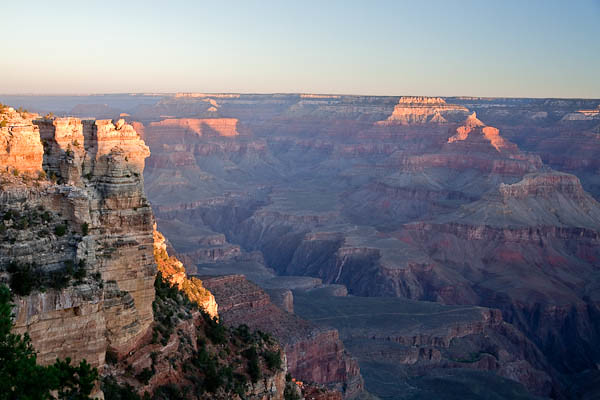
Grand Canyon Sunrise 8:23 AM

Grand Canyon Sunrise 8:23 AM © 2010 Bo Mackison

Grand Canyon Sunrise 8:24 AM

Grand Canyon Sunrise 8:24 AM © 2010 Bo Mackison

Grand Canyon Sunrise 8:29 AM

Grand Canyon Sunrise 8:29 AM © 2010 Bo Mackison

Grand Canyon Sunrise 8:33 AM

Grand Canyon Sunrise 8:33 AM © 2010 Bo Mackison

The wonder of it, the wonder of the sunrise. Each morning, one of the grandest shows on earth, available for your viewing pleasure. Weather permitting.

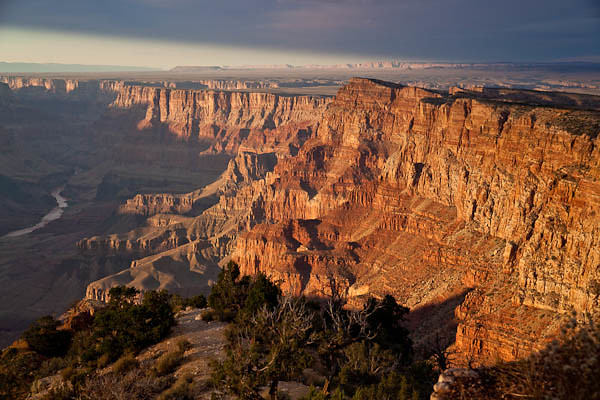
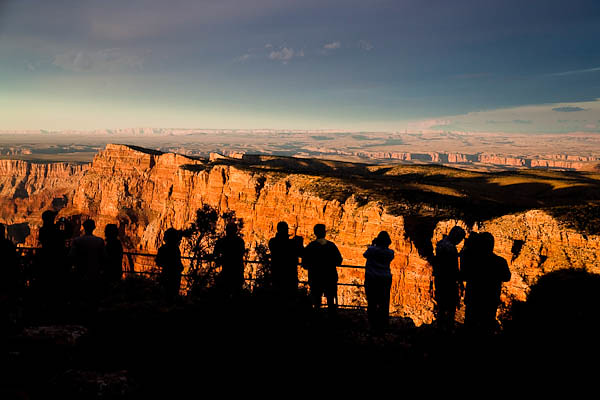
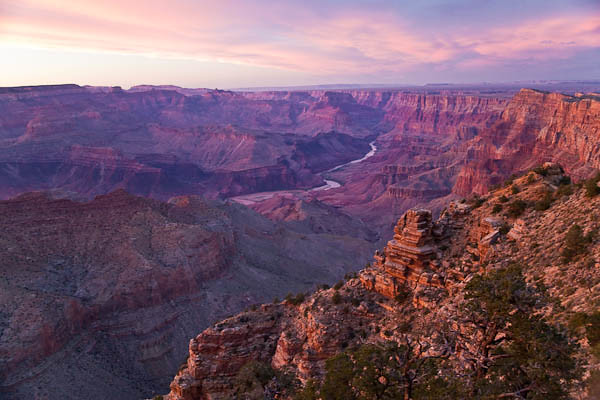
Grand Canyon Sequence at Sunset

Grand Canyon 7:23 PM

Grand Canyon 7:23 PM © 2010 Bo Mackison

Grand Canyon 7:26 PM

Grand Canyon 7:26 PM © 2010 Bo Mackison

Grand Canyon 7:29 PM

Grand Canyon 7:29 PM © 2010 Bo Mackison

Grand Canyon 7:31 PM

Grand Canyon 7:31 PM © 2010 Bo Mackison

October 7. Sunset was 7:38 PM Mountain Standard Time.

Grand Canyon 7:46 PM

Grand Canyon 7:46 PM © 2010 Bo Mackison

Grand Canyon 7:48 PM

Grand Canyon 7:48 PM © 2010 Bo Mackison

Grand Canyon 7:51 PM

Grand Canyon 7:51 PM © 2010 Bo Mackison

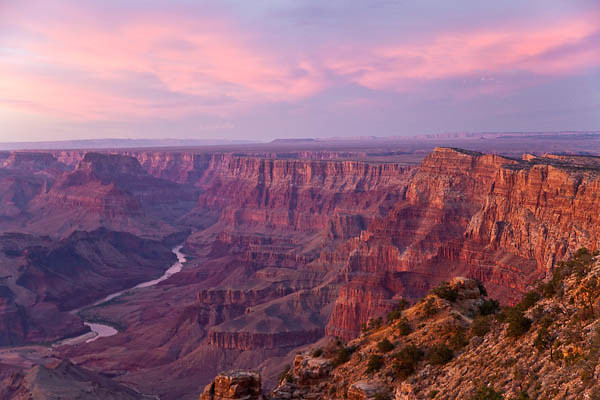
Grand Canyon 7:52 PM

Grand Canyon 7:52 PM © 2010 Bo Mackison

Glen Canyon Dam

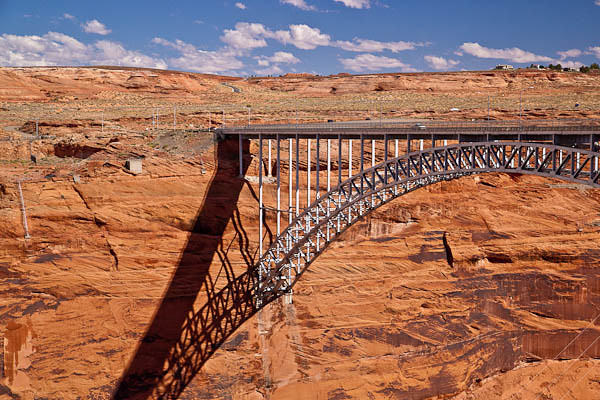
Glen Canyon Bridge II

Glen Canyon Bridge © 2010 Bo Mackison

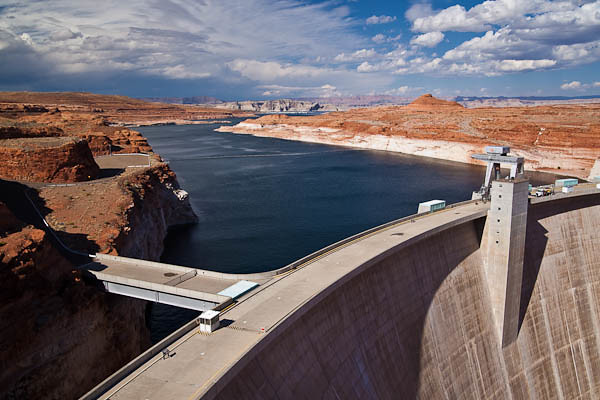
Glen Canyon Dam built between 1956 and 1966, blocked the Colorado River near Page, Arizona, and provided electricity for parts of Arizona and Utah. It also created Lake Powell. The Glen Canyon Bridge crosses the river just south of the 710 foot high concrete dam.

Glen Canyon and Dam

Glen Canyon Dam and Lake Powell © 2010 Bo Mackison

There have been numerous environmental questions regarding the dam, including its effects on the health of the Colorado River habitat and the effects on the Grand Canyon which is located upstream of the dam. Lake Powell does provide numerous recreational opportunities, but most of the environmental impact studies point to the many negative consequences.

It’s an engineering site that is an amazing sight, but one wonders what the true costs of the construction will be in the long run.